achyutktelang blogspot

  • Subscribe to our RSS feed.
  • Twitter
  • StumbleUpon
  • Reddit
  • Facebook
  • Digg

четвер, 13 березня 2014 р.

Choose Death: Revisiting TWILIGHT's Junky Delirium.

Posted on 07:50 by jackichain

"Young girl with fire / something said she understood /
I wanted to fly / she made me feel like I could...." 
- Neil Diamond  ("Shilo" - song about his childhood anima playmate)

"but we can fly... with these!" -  John Lennon 
(showing heroin pills [?] to Yoko  - John and Yoko: A Love Story TVM- 1985)

"You're like my own private brand of heroin"
--Edward Cullen (to Bella)

"When you're on junk you don't drink" - W.S. Burroughs (Junky)

"I never drink... wine." - Dracula

"My name is Bela Lugosi... I've been a morphine addict for twenty years."
-- (Martin Landau) - Ed Wood

Bella, flanked by cumbersome breathers
Vampirism is every girl's dream if she be faire and smart enough to see when a hottie in the mirror looketh back and to know, if she's ever to bid surcease time's incessant pawing, it's now or never. Small price, killing off your inner Snow White soul via a lugubrious huntsman, to keep that hottie smiling back. And if there's no such thing as vampirism or eternal youth, well, some drugs come close. Slowing things down, killing the appetite and sleep cycle, drugs, love, and vampirism replace glazed-eyed homogenous breather-eater lockstep with an unending thirst.

For the first four films of the Twilight saga, Bella wisely wants to get undead while she's still got that pale flawless skin (her mothers' already shows the results of age and prolonged sun). And that is just one reason why I believe the series so subversive. Bella chooses death. She subverts the fairy tale maturity myth, jamming a crowbar into the wheel of time, making the saga a kind of alcoholic-addict fantasia wherein the enchanted bower is returned to out of clear conscience. She's hip to the banality of 'the right choice.' You can argue she merely chooses Edward (Robert Pattinson) and death goes with the deal. You can argue he's a pretty creepy specimen (old enough to be her great-great grandfather, stalking her and watching her sleep all night after climbing in the window) but he's not a real person. He's a daemon lover / arrested animus projection! The Twilight saga doesn't reflect the move from bleak Cinderella attic to magic pumpkin coach to married princess -- which would mirror a girl's transition from child to adulthood-- but the reverse. Bella moves from sunny Florida girl to the eternally cloudy Forks like its some castle tower prison. In that sense the series is more a Greek tragedy, wherein unresolved past issues come burbling up to drag our heroine back down into the mucky-muck. But there's also a conscious decision on her part, the Campbell mantra of "when falling, dive." She's a Snow White who makes the conscious decision to go back to sleep because she can't be bothered with an awake Prince Charming with all the cumbersome breathing, snoring, bathroom issues, and boring functions one must endure with such a dubious prize.


And the idea that Edward has nothing else in his life to do other than stalk her is creepy sure, but also relevant to the daemonic animus, being the half of us in shadow while our daily waking egoic consciousness goes about its day, the one who literally has no life without us, and is most active while we're asleep (and vice versa). There is no sun or blue sky for the animus. It can only run loose when our conscious is asleep (or, if we're artists and writers, performers or mystics or schizophrenics, truly awake). Edward's daemon lover archetype ancestry stretches back to grim roots, down deep to Eros and Psyche and up through the Romantic poetry of Keats and Shelley, the daemon undead druggy lovers of Coleridge, Poe and La Fanu finally up to the Anne Rice 90s before climbing up to the ultimate teenage Gothic flowering, Edward.

I recently re-watched the entire series as it was all playing on one cable channel or other last month, and after the entirety of around 12 hours of film it definitely holds up, especially if you really like dark purples, which I do. And lastly, it's great because, for me at least, it's guilt-free, there's no objectification of the females, rather we have a rare example of the 'female gaze' and the sole sex appeal comes from the boys, which does nothing for me turn-on wise, hence no guilt. Rather it compels me to realize that maybe my vague discomfort is how most women go through their movie watching life, enduring vast stretches of their boyfriend's chosen strippers and bloody gunfights. In Twilight: New Moon Bella goes to the local cinema with her mortal, age-appropriate friend Jessica (Anna Kendrick) and coming out laments how crappy the film was, mainly as there's "No hot guys kissing anybody." Imagine, a film daring to lament such a shallow thing. Then I remember Dracula again, Bela Lugosi commenting on the film's appeal to women:
 "It is women who bear the race in bloody agony. Suffering is a kind of horror. Blood is a kind of horror. Women are born with horror in their very bloodstream... It is women who love horror. Gloat over it. Feed on it..." 
And also, in a way, it is the woman in me, my own dream lover anima, my ego's dark unconscious shadow, who loves Bella as a projector screen for herself, as it allows her in turn to look out through my eyes and then through Bella's eyes, for each anima and animus has their own inner daemons to work through, and so it goes, in fractals either direction. My anima rewards me with dreams of paradise (which for some reason is a cavernous sub basement under my suburban childhood/teenager neighbor's house hot springs with concrete floors and strange books on benches and vague memories of having a fling with the mother, who is not the same mother who actually lived there. Her husband's always away, and if I can find my way down there, she meets me if so inclined. I've never gotten even to first with her (it's not that kind of dream) but I wake up thrilled, longing to recapture my memories of this hidden underground sanctuary. It looks like a cross between some secret room in a Vincent Price movie, the basement lair of Hammer's THE REPTILE, and Carfax Abbey's ruined Gothic basement and Bellevue's old hydrotherapy room.

And maybe I am prejudiced; Dracula is my favorite horror character. Bela Lugosi is my favorite horror actor, and next to William S. Burroughs, also my favorite junky. And even Bella's name conjures him, so it's sad that so many critics I normally respect tow the party line with the Twilight series, never seeing past the 'teen phenomenon' hooplah. Meanwhile these critics respect, some even revere, the more boy-friendly Harry Potter, Lord of the Rings/Hobbit, and Star Wars sagas, which have twenty films between them (so far) and about that same number of  lines spoken by women. Unless they're princesses to be admired from afar, to be kissed before they turn out to be your own sister, and so forth, women seem to be unwelcome in these franchises, yet these films get way more respect in general critical consensus. I can only guess Twilight's detractors are nerds who've never done drugs, or had more than one girl or boy interested in them at the same time.

If you're like me, with a loud, bothersome anima who withholds great sentence structure and inspiration from your writing on a whim, then you know she loves movies that feature crazy women she can project onto; and so you know she will reward thee with vast acres of flowing prose when she gets to lock onto an Angelina Jolie in Girl Interrupted or a Natalie Portman in Black Swan, or a Catherine Deneuve in Repulsion, or even Anthony Perkins in Psycho. (Right at the moment I wrote his name, Bogie says "You're a good man, sister" behind me - synchronicitous!)  Twilight's rife with such crazy feminine. My anima loves that it is not life-affirming but a solid romantic mood poem-- tortured as Edward Burne-Jones trying to score laudanum at the strip mall-- and an exoneration of the death wish underwriting everything from self-cutting and anorexia to just partying like there's no tomorrow or even just sleeping late and missing school, going from rainy day Gloomy Sunday blues to hooking up with a pallid junky and getting involved in 'the life,' understanding what that means, fully cognizant of all that will be lost, yet nonetheless daring to answer 'not to be' when Hamlet asks his mortal question.


Only rubes would think such a choice false next to the demands of the 'paternal' life-choosing next-stage animus, i.e. the result when woman's daemonic lover turns to inner critic and lecturer, who endorses sanctified institutions without question, trusting doctors, school principals, fathers, husbands, and politicians over her own better judgment. This new animus argues over SUV parking spots at the kids' soccer practice, feels the need to remodel the kitchen, honor PTA appointments, hire babysitters, monitor their children's friend choices, and even approves her own gradual arrival at an assisted living domicile. We can see women dominated by this stage of the animus in the Tea Party -- Michelle Bachman, Sarah Palin, and Ann Coulter -- they let their animus possess them at the expense of their own gender's liberty. It's only near the final 'second childishness' stage of Shakespeare's seven ages the "mere oblivion,"  sans taste, sans eyes, that the younger daemon lover animus returns, to shepherd these 'healthy' choice-making woman into the void. This is even pictured in New Moon, wherein Bella dreams of being all super old and Edward as young as ever, waiting patiently all this time for her to be done with the 'living' he so wishes for her. 

To understand the beauty of Bella's rejection of this fate takes perhaps the mindset of the addict, the sort of girl who stays upstairs reading fantasy novels when the sun's out or the one who's depressed and in misery (and in school) until a hot older drug dealer sweeps her off her feet. Some girls just can't wait for the gradual fade-to-black. Some girls are too enamored of the daemon lover to let him go for the duration of her adult life on the vague promise he'll be back at the end. Sure the choice to stick with him is not healthy but who cares? The women who choose to keep their daemon as their animus are our romantic heroines in the truest sense -- for don't forget that forsaking the daemon may allow her to exit the fantasy and enter the social order (to upgrade animus projections to, say, her shrink), but who needs another normal well-adjusted girl? Not the readers and seers and livers-in of fantasy. 
"Many myths and fairy tales tell of a prince, who has been turned into an animal or a monster by sorcery, being saved by a woman. This is a symbolic representation of the development of the animus toward consciousness. Often the heroine may ask no questions of her mysterious lover, or she is only allowed to meet him in darkness..." - Marie-Louise von Franz

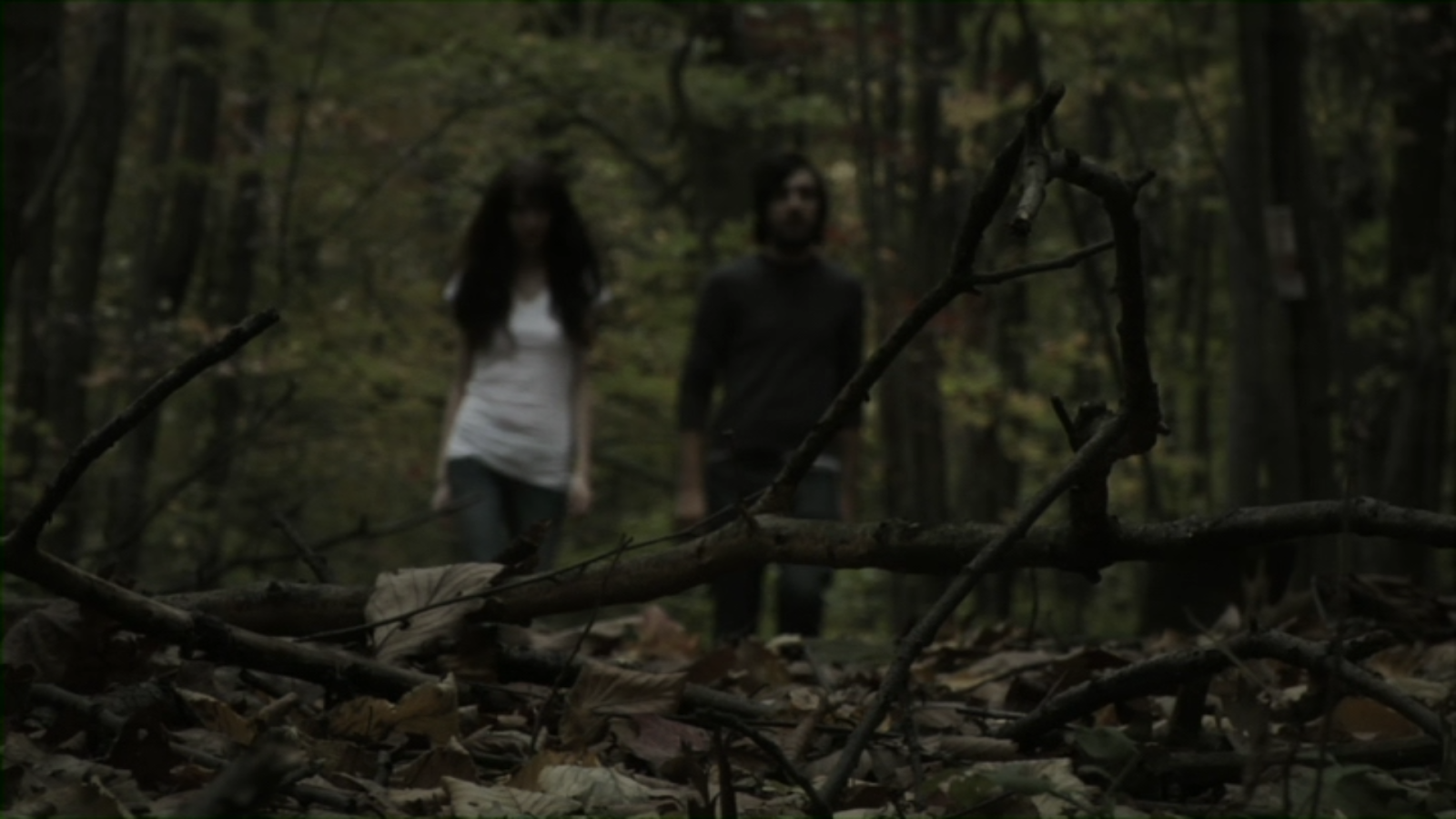
Consider Bella and Edward's break-up early on in New Moon: his 'heroic' attempt to rescue her from himself, to usher her from the faerie bower and into the next stage of her development: the camera wobbles when it shows Bella, we feel her knees getting weak and the stars going around, the drop of anguish cutting through her voice, but the camera is straight and calm cutting over to him, accenting his total emotional coldness. She staggers off, disoriented, winds up sleeping in the forest, a kind of refusal to go back to normal. Rather than following his advice she courts death actively, all but daring him not to come to her rescue.

 Reality is seldom operating anywhere close to a teenager's inner state. Myths are truer in that sense; they are not at all sentimental, for as Jung notes: "Sentimentality is a superstructure covering brutality" (ala John Ford); they are terrifying because they unveil that which was hidden for a reason. They are beguiling, addictive; once the light is shown over that shadowed corner of the psyche, the grateful prisoner chained in that corner rewards you with hordes of little treasures its stolen from you on the sly ever since you repressed him into that dark corner (usually around your first day of school): bottles of endorphins and dopas and artistic inspiration its fermenting for just such an illumination. Gradually he gives out less and less for more and more liberty to run rampant in your psyche. There's a thin line between being rewarded with one's own treasures and being held hostage in the zone between a daemonic dream lover's ardent wooing and drug addiction, and crossing that line has its own delirious Stockholm syndrome high if you know how to treat the agonies and despair of withdrawal as just another kind of masochistic kick, the muscle ache and burning skin just love 'not given lightly' by your inner whiplash girl child in the dark.

"The pain was my only evidence he was real." - Bella 
Enlightenment doesn't occur from sitting around visualizing images of light, but from integrating the darker aspects of the self into the conscious personality. -- Jung
Blood, the life, love: over the course of five films Bella never has a single real hobby other than desire for Edward, anything else engaged in just a distraction; bringing junked motorcycles onto the reservation for Jake (the werewolf) to fix isn't because she likes him romantically but because the image of Edward shows up whenever she does 'something stupid' - i.e. crashing into a tree. Her various suicide attempts conjure the spirit of Edward saying "Bella, don't" - trying to wrap her in his overprotective shroud, playing the latter stage animus in place of the dream lover (as above, the promise to return at her death bed). But Bella's misery wobble framing steadies around Jake and Stewart shows she's a far better actress than given credit for, as she modulates brilliantly from pale, shocked jiltee, to anguished grieving misery, to playful and sharp-witted, as often happens when one can see and tell the person they're hanging with is in love with them, a captive audience. Bella's using him, really, as exploitative in her way as the first poison-brained white trader to swap furs and bear skins for two-cent trinkets. And using someone to get over someone else is not cool, yet how else are you going to do it?


And that's why Bella is so great both as a character and as Stewart's performance: she is not just one person, she has many facets and not all of them are admirable but Stewart plays the less admirable as if they were admirable --she doesn't know the difference but we do. When geeky mouth breathing classmate Mike (Michael Welch) finds out she's been dumped, he awkwardly asks her to the movies and she snaps, "How about 'Face Punch' have you seen that?" I love that line! The kind of thing that one would say in a cafeteria as a reworking of "how about I punch you in your stupid face?" That Face Punch turns out to be a real movie hardly matters to the brilliance of the line--its refreshing savagery. It probably wasn't even a real movie before she mentioned it. She creates the future before her like a reverse wake, like a zipper uniting the conscious and unconscious halves of psychic jacket, Edward and Jacob zipped together into androgyne Bela.


I can really only think of one or two heroines in film who measure up to that level of realistic fuckerwithery: Scarlett O'Hara in Gone with the Wind and Cathy in Wuthering Heights. Out of touch critics in the house can't rear back like startled horses over those ladies' behaviors as they do with Bella's, because they're old established classics, written by, not surprisingly, female authors. Each has a character smart enough to act like she doesn't know it, who slouches and mopes and takes advantage of seeming obtainable but is really quite grandiose and fierce, who plays coy and clueless about how much various boys are crazy over her, a total of traits that, in the rom-com world, would be the purview of bitchy villains, not protagonists. Each has two boys mad for her -- one wild and one anemic -- the twist in Twilight is that the wan, pale anemic one is the true love choice -- the vibrant anima mundi-reflection of the Jake / Rhett / Heathcliff is relegated to the lesser mortal bin; Edward's name even sounds like Edgar, who marries Cathy and becomes as subjected to her as Jake is at the mercy of Bella in Twilight. 

It's this reversal I most resonate with, because Bella is more than just one of a series of female-penned ball-busting manipulating wantons daring to reappropriate the gaze, she is also one of the 'hurrah for the next who dies'-style lost generation, the modernist woman 'who chooses death,' realizing in it an honest choice truer than the one of life and health and mortality because among other things it's a choice that gives her a chance to stare down her fears, to embrace the demon and daemon, to ride over the cliff and into legend. Such women include Evelyn Venable in Death Takes a Holiday, Kate Winslet in Titanic, Assumpta Serna in Matador, both chicks in Thelma and Louise, Ava Gardner in Pandora and the Flying Dutchman, Dietrich in Morocco and Dishonored, Sherri Moon Zombie in The Devil's Rejects.  Only by deliberately choosing to act against their own 'best' interests--with gaggles of men and authority figures trying to talk them out of--can these romantic feminine characters be free. Whether that freedom lasts another week or a few hours is irrelevant, except the sooner death comes the sweeter the terrifying narcotic immediacy of the remaining life. (see: Twilight's Cinematic Ancestors). The movie ends either way, why not go out before the credits so you can at least pretend the movie never ends?


As relevant as Twilight's reversal-of-logical-maturation metaphor to death or addiction is the solitary life--spent largely with the unconscious, getting to know, as it were, one's second self through allowing it free reign at the typewriter. All good free-flowing inspired poetic 'flights of fancy' come from the writer's daemonic, the animus or anima. this end my favorite of the five Twilight films has been New Moon, mainly because the brilliant intertextual use of Bella's birthday to invoke a range of age-related fears and longings (including the dream where she's super old, perhaps the most honest and strangely honest metaphysical rendering of birthdays since 2001), and a high school English class assignment, Romeo and Juliet, which contextualizes both Bella's various adrenalin-rush seeking self-destructive behavior (she becomes, as her human friend says, disapprovingly, an adrenalin junky) as well as the more obvious (and fascinating) 'rescue' of said animus, preventing it from dissolving and reforming as the next phase of adult maturity takes over and the buzzkill 'always right' tea party drip, the safety-first counselor moves in: "Bela, stop."

Addicts surely relate, but even more cogently than Romeo and Juliet, Twilight's arc of Bella's pitiless insistence on becoming a vampire reminds me of Antigone, wherein she chooses to disobey the law to not bury her brother, knowing full well it ensures her death. This loyalty to the dead to the point of a conscious, clear-eyed choice results in a prime illustration of the way feminine contrary fearlessness conquers even fate and you get to tell all the smarmy idiots who 'just want what's best for you' to fuck off:
"I shall lie down
With him in death, and I shall be as dear
To him as he to me.
It is the dead
Not the living, who make the longest demands:
We die for ever… "  -- Antigone 
For Romeo there's more grief at work fueled by brashness, rather than Antigone's (or Bella's) cool detached insistence on being 'changed.' Consider Romeo's speech:
"... I still will stay with thee,
And never from this palace of dim night
Depart again. Here, here will I remain
With worms that are thy chamber maids. Oh, here
Will I set up my everlasting rest,
And shake the yoke of inauspicious stars
From this world-wearied flesh. Eyes, look your last.
Arms, take your last embrace. And, lips, O you
The doors of breath, seal with a righteous kiss
A dateless bargain to engrossing death."
He's seeing death as a negative; he's waaay off. He's a hothead. World-weary flesh? He ain't never been anywhere. His act is one of youthful grandstanding, a poseur rather than Antigone's or Bella's cold, logical insistence, their refusal to judge death as negative. Sure she's annoyingly obsessive, sure she needs a hobby other than pining or mourning, but neither heroine (nor the ones in Wuthering Heights and Gone with the Wind) are in a 'reality' - they are in a story, a myth. That's the fundamental mistake of so many movies: they must somehow reflect 'reality' and set a 'good example.' Just look at the roster of Oscar nominations and you see it -- the moralizing, the historical heft, the inspiration. Who needs it? Shakespeare and the Greeks never cared for reality or setting good examples, rather they cared for myth, which is a deeper truth of the psyche, by which I mean the sum total of the unconscious and waking selves, the dream of night and the reality of day merged in the titular time, through symbol and archetypes and and performance, the only language the unconscious understands. Twilight cares only for sleep, for chasing the phantom shadows of the romantic animus and kicking the rescuing woodsmen to the curb, even diving after your merman to drown in the briny thrashing deep. Bella fixes herself to Thanatos like a lamprey, she stays true to her animus' original projection. And Stephanie Meyer's series is a success because there's no truth left in waking reality anyway ("Who looks outside, dreams. Who looks inside, awakens" - Jung), recognizing in their airbrushed pale-skinned phantom Edward the same thing that once hypnotized legions of Garbo lovers in the death dream silent theater of the 20s. They called them "Garbo widows."
 
... the animus is also sometimes represented as a demon of death. A gypsy tale, for example, tells of a woman living alone who takes in an unknown handsome wanderer and lives with him in spite of the fact that a fearful dream has warned her that he is the king of the dead. Again and again she presses him to say who he is. At first he refuses to tell her, because he knows that she will then die, but she persists in her demand. Then suddenly he tells her he is death. The young woman is so frightened that she dies. Looked at from the point of view of mythology, the unknown wanderer here is clearly a pagan father and god figure, who manifests as the leader of the dead (like Hades, who carried off Persephone). He embodies a form of the animus that lures a woman away from all human relationships and especially holds her back from love with a real man. A dreamy web of thoughts, remote from life..." - Marie-Louise von Franz

The mistake most Hollywood films make is to misinterpret Franz's "dreamy web of thoughts" as a condemnation, and to make sure their films have no such mistakes on the part of their heroines. But kids need to see their dark daemon webs onscreen --they don't need to see their lives, they see enough of them already, too much even. They don't need the visibly uncomfortable gym teacher creeping even into their most private reveries to caution them about protection. The unconscious is aggressively contemptuous of goodness and safety. The more one tries to eliminate all danger from their lives the farther away death becomes in their field of vision and the staler and duller real life becomes.

And so it is that Twilight draws hostility from critics who perhaps lack enough self awareness to realize their vision has grown dull and stale, too blind to their own opposite-gendered unconscious archetypes to question their initial hostility. I admit I'm prejudiced. When I first starting drinking, for example, I was progressively warned never to drink alone, or to drink in the morning, lest I become alcoholic. But I couldn't just find people to hang with at any hour of the day, and drinking in the morning was a miraculous way to alleviate hangovers and make the whole day rosy. Of course they were right and I almost killed myself a dozen times over and had to stop drinking altogether after a paltry 14 year-run. But I regret nothing! And if heroin had been offered to me, or speed, I probably would have gone for that, too. Now it's cigarettes. Everytime I see some woman on TV with no fingers or throat or hair croaking her warnings about smoking through her tubes I just mute the sound like I'm sure Poe's Prospero wishes he could have done that striking clock chime at his Masque of the Red Death. But these are the choices we make. And if more people made conscious choices to destroy themselves in these slow brilliant ways maybe our world wouldn't be so gruesomely overpopulated, or our country wouldn't be going bankrupt from too many old people still alive and draining Social Security, Medicare, and union pensions for all future generations, as doctors spend our children's future to keep these viejos alive for one more grueling month. It's only when we're no longer afraid of death that we can truly be free, and take our crowbar out of the spokes of the circle of life. In this sense, Twilight is like a lone dark spot in the unending light, or a light in the darkness - what's the difference.

We see a bit of western civilization's knee-jerk pro-life need for consideration in New Moon, wherein Edward dumps Bella, and flees with family in tow but she can get him to appear by risking her safety foolishly, forcing him to move from  demon lover to paternal but neglectful lecturer, telling her to turn around and so forth. It's great because we hate Edward for causing her so much pain, we relish with her the chance to bother him through such disregard for personal safety, forcing him to reveal a stern buzzkill authoritarianism that is utterly without effect or genuine authority.

It's so bitterly fitting as a counter to that that even after director of the first film Catherine Hardwicke scored big, she's replaced by a guy, Chris Weitz, for subsequent films, the guy borrowing a lot of her aesthetic sense but quietly draining it of at least half Hardwicke's fairy tale Jungian archetypal contexts, animal and color symbolism (not for nothing Edward is first met sitting next to a stuffed white owl, wings outstretched and claws preparing to clutch its unwary prey, in science class) but the first thing a film company does when they see a woman has made a hit film is to take over the sequel and kick her to the curb so she doesn't queer up this hit 'they've' lucked onto, so here I'll just quote a woman, from one of the few mainstream sites worth a damn, The Guardian:
"Twilight the film has been a massive success, but its audience is dismissed as fangirls, groupies, teenyboppers, airheads. It is sneered at by the same critics who misogynistically savaged Sex and the City and Mamma Mia, two other films made for women, with such blatant transparency. Strange that the belittling should be so vociferous; we women are the biggest group in the world, yet our viewpoint is ridiculed and denied, our testimony ignored. But that's the way it goes. The studios will use Twilight's profits to fund more films in which there are no decent roles for women, no women in major positions behind the scenes, no women directors. That's happened with Twilight's sequel: Hardwicke has been sacked and replaced by the guy who made The Golden Compass. The female gaze has been blinded yet again." -Bidisha, Guardian 2009."
I wouldn't go that far, Chris Weitz does an amazing job of preserving the female gaze -- he must be in tight with his anima - but there's also a sense of really picking up on what made the book and first film work - whereas to me the weakest of the series is Eclipse, which is directed by a different dude - this one made 30 Days of Night - which makes sense as Eclipse is almost a sequel (I even lumped them together before I knew they had the same director in a post on the Nordic Circle rom-hor genre).  It's fine but I find Eclipse to be rather washed out color-wise, and focusing too much on action and flashbacks as opposed to grand archetypal coming-of-age myth junky metaphor soap subversion and brilliant purple and mist scenery. I should point out too that The Golden Compass has a young capable girl in the lead, boys to the side, wicked stepmother and a Catholic stand-in bad guy contingent similar to the Volturi in New Moon. Bad box office killed the chance for sequels, alas, and the Christians backlashed both for the anti-religion angle and, no doubt, the capable girl with powers angle. A case again perhaps of deep-seated castration anxiety undercutting a lot of parents and unconscious male's good sense, or maybe enhancing it. But since when have fairy tales and myths had anything to do with good sense? If they did, Red Riding Hood wouldn't even talk to the wolf in the first place, and all kids would be bored sick, and then probably have to go talk to wolves for real and get eaten and it would be your fault!


There was a time when women screenwriters ruled in Hollywood, before the code came into effect, and talking to wolves was all the rage. But with the arrival of the code in 1934 came the feeling that, like now, telling women's stories is too important to be left to women. So stories of grandiose emotion and feeling were replaced by smug sermonizing where childish women are brought to heel, weened of their immature desire to be independent by endured humiliations at the hands of twits. Twilight dares to undo all of that, to go back farther than even the pre-code box office tallies can reach, down into the murky recesses of the Brothers Grimm and pre-Inquisition alchemical magick, straight like a hot shot into the archetypal vein, the pulsing warm narcotic rush of the eternal feminine distilled and uncut, so primal it invokes knee-jerk revulsion from most men, a revulsion so deep they don't even recognize it.

If, as Bidisha says above, the profits will be used to fund more male-centric films, well, we can only hope more films about women ruling the dark abysses of true myth will succeed at the box office. Snow White and the Huntsman and Black Swan did well by their women, even if directed by men, and even Disney has dared, for the first time ever, perhaps, to make an evil queen the star of a film, Maleficent (a very interesting name, as her own 'male-efficient' animus is already running the show). Starring Angelina Jolie with Art Deco cheekbones, it could be a bust of CGI 3-D boondoggle like that James Franco Oz, or it could rock. One can only hope it doesn't end with her falling in love with some doe-eyed dork prince and abandoning her witchy black magick ways so she can dote on him hand and foot, as is done, say, in post-code films like I Married a Witch and Bell, Book, and Candle.

I still remember when Jolie sparked bonfires with her Gia-Foxfire-Girl Interrupted power. We'll have to see if there's any of that blood left in her, or if her legions of biological and adopted kids have drained her dry. I'm happy she saved the world and all, but some of just want to watch that world burn.

What's tragic isn't that we want it to watch the world burn, but that we have to clarify the 'watch' aspect to placate nervous censors, the NSA, common 'decency', Batman, and so forth. When we let life-affirming paternalistic morals even in our dreams our dark shadow hearts may have no choice to but to act out into the real, or worse, retreat --until all that's left are church socials, Lassie, freckled children, chaperones, white picket fences, and enough treacly strings to drive even a good girl straight to the devil. Isn't that why he set it up? Why he put the morals in and took himself out? The devil can't corrupt your soul when he's busy on the screen. His biggest triumph is convincing us not to put him there, not to project him out at all, just let him smolder unseen in his buried celluloid coffin like a sulky genie, until even the tiniest spark blows the whole thing off. 
Read More
Posted in Addiction, Alcoholism, Archetypal Psychology, blood, Dracula, drugs, heroin, horror, Jungian, Kristen Stewart, morphine, Robert Pattinson, sex, Twilight, vampire, Virginity | No comments

вівторок, 4 березня 2014 р.

Bitches Be Trippin': TOAD ROAD, A FIELD IN ENGLAND

Posted on 11:11 by jackichain

I've always taken a hard line stance that idiots (and minors, of course) shouldn't use drugs. Drugs should only be taken by artists, truth-seekers, visionaries and never for dumb burn-out kicks... Seeing all the great drugs wasted on the snickering young in the 2012 indie Toad Road made me remember back to the young age when I could only get high, or even get hold of a beer, by driving around with metalhead Central Jersey burn-outs. Cool as some of them were I could have done without the snickering idiot who lit us up a joint, first I'd seen in weeks, and only when it was too late announce it was laced with PCP. Driving the 20 miles home from that encounter took approximately three years of amok time trapped in a blue-light and white fog prism (or prison), wherein, among other things, I could dim or brighten street lights with my mind. And I hated the music. I'd bring Velvet Underground's "Sister Ray" thinking they'd dig it but for them it was Maiden, Dio, and Ozzy. End of discussion.

 I ditched them senior year when I discovered the Clash and punk rock - which was all about cocaine, whiskey, and slam-dancing at the Trenton club City Gardens' all-ages punk shows: The Ramones, Iggy Pop, X, the Replacements, and Husker Du. But still I wasn't satisfied. My freshman year punk contingent were scared of acid, tried to warn me off it, but I felt the calling of a higher power, a spirit was beckoning, so I ditched the punks as abruptly as I'd ditched the metalheads, and became a hippie, and there, enduring endless Dead concert tapes, the LSD and shrooms ran wild and free. I was cured, all right.

But what a burnout-and-lightweight-strewn path I left behind --so many people who never should have tried drugs at all or at least not until college but they never went; they were just too damn stoned. Seeing Jason Banker's 2012 film Toad Road recently reminded me that the blithe openness about psychedelics on this site might do more harm than good in the short term and worse, expose a truth hidden even from myself, that my whole holy enlightenment shortcut-seeking trip masks just another garden variety waste case burn-out, because you see, I'm one of those idiots.


But all through my travels I've seen people, especially the very young and Piscean, get way into psychedelics far too fast, too deep, chasing some white rabbit truth through twisting trails right into rehab, jail, or the slab.  It reminds me of that question posed to Anne Wiazemski in Godard's Sympathy for the Devil (1967) "Do you consider drugs a form of spiritual gambling?" ("oui"). Spiritual seekers never listen to advice from anyone who's already chased that rainbow and maybe they shouldn't (the "I did acid and it changed my life but you shouldn't because I already did so you're welcome"). One such doomed truth-seeker, in Toad Road, is Sarah (Sarah Anne Jones), a young wastrel way cute to be wasting time with the scruffy band of marauders she's chosen. An older member, James (James Davidson) meanwhile is getting counseling and shortly turns into a preachy buzzkill, which is too bad, as Davidson isn't the usual mumblecore anemic smarm merchant. He could go do something grand, but he's too in love with Sarah, he thinks, and that's his excuse.. to follow her down that hole, lecturing that she doesn't have to do drugs to have a good time, but he'll still hang out because he has to 'protect' her.

Sarah will have none of it. She wants to go the Fulci distance, tripping her way through the seven gates of Hell via the legendary PA haunted mile, Toad Road, where one might, as they say in The Beyond, "face the sea of darkness, and all therein that may be explored."


Sadly, the real Sarah Anne Jones died in real life shortly after the film's premiere, though I got the sense of a fractured kind of ghoulish 'coming true' of the storyline that hints-- even if she died after the film was completed---that she was MIA on set a lot, ala Marilyn Monroe during the never-completed  Something's Got to Give (1962). Maybe this was just exactly as Banker envisioned or maybe I missed something. Like so many trips I got talked into taking by the Village Voice, Toad Road feels like it had a chance to do something wild and blew it. Maybe that's her fault, or his, or mine. Maybe it's just my whole idea of something wild is warped. 


But the music is good, the photography tight and clever, and when it all hinges on the frail Sarah, her insanely tiny legs hugged by tight hipster pants, things are good, if sad. She has a great way with throwing her shoulders around, and her thick long hair coupled to her waif thinness makes her seem like a willowy older sister to the title character in Valerie's Week of Wonders. If you know the druggie scene you know this type of girl and probably fell in love with her at some point. H
er damaged sweetness and her unrelenting drive to explore the void were a haunting combination. and wrote a poetry book, or album about her, like that girl Holly for Craig Finn (of the Hold Steady): "Holly's inconsolable / unhinged and uncontrollable / cuz we can't get as high as we got / on that first night." If you know the type you shiver when you hear that song, shiver with her memory and the chill of never getting that first night glow back, the torture of being in love with someone you are powerless to save, and all the more in love with them for it. I would have enjoyed the Toad more if they had maybe gone a little meta about that kind of memory, shooting-wise, as without it the Picnic at Hanging Rock element never really gels with the muted realism (imagine if the girls really did disappear during filming but they didn't want to admit it so they changed the film to hide their absence). Still it's a promising feature film start for former documentarian of the youth music and 'culture' scene, Jason Banker, and I love the dark and beguiling poster series:

------------------------------------------------


I also like the art and posters for Ben Wheatley's A Field in England (2013), a much more psychedelic recall-shiver-inducing film, in gorgeous black and white, which draws from old woodcuts and psychedelic posters from mid-60s Britain, correctly recognizing their common psilocybe cubensis roots, the mushroom common to cosmic alchemists of the 17th century and Zen hipsters tripping at outdoor music fests in this one, possibly in the very same field, merging with each other's future and past ghosts.


The film chronicles the manly transformation of a wussy assistant alchemist, Whitehead (Reece Shearsmith) from his cowering point during a furious offscreen battle to his ultimate triumphant return from the land beyond. During the time between he pals with a savvy deserter Trower (Julian Barrett), a dimwitted wanderer (Richard Glover), a fourth man (Peter Fernando) with a mysterious agenda, and this quartet set off in a series of fascinating tableaux across one of the huge rolling hedgerow-crossed fields of England. Set sometime during the English Civil War of the late 1600s, Wheatley does right what most historical dramatists do wrong: the clothes look like they fit the actors and that they've been wearing them for about twenty years without a bath --as was the fashion-- and the pistols and muskets all need to be patiently reloaded with powder and ball after every shot, which is how it was, but here it seems to be an actual reality they're used to rather than a constant surprise as it is in most films set in the era. This results in some hilarious shouted exchanges as warring men hide in the grass to reload during lengthy gunfights. Digging for treasure is involved, and a shady Irish bastard of an alchemist, O'Neil (Michael Smiley), his assistant Cutler (Ryan Pope), a psilocybe mushroom circle, a black sun, and some of the best use of sudden wind gusts since, um, 1925's The Wind, or ever. The acting is uniformly pointed, Amy Smart's dialogue rich in period slang, robust expletives, hilarious asides and tangents, forgotten alchemical science, sly deadpan joke illustrations of the way men befriend one another in times of trouble, and lastly the way a mouthful of the right mushroom can turn a meek scholar into a lion!

The men never leave the field, are never seen indoors, and there's almost no one in the cast but these five men (no women), but Field in England never feels dull or Jarmusch idle. And there's H=Jim White's slowly building score moving from a single, sturdy military drum beat into a full blown sonic mind-melting reminiscent of Bobby Beausoleil's score for Lucifer Rising. There's an invigorating kind of mortality-sneering masculinity vibe ala Kathryn Bigelow's The Hurt Locker. Interesting than that Field was written by a woman! Aye, and lensed by a woman (Laurie Rose) and produced by two women (Anna Higgs, Claire Jones) and a man...


Great as the existential Sartre-Godot-Aristophanes-style robust gallows humor is, and the weird mystical angles with ropes into the alternate realities, etc., the peak aspect comes from a unique recreation of a ground zero time-distilled psilocybin freak-out wherein, buzzing and soaring in and around its droning center, the score sirens out across a series of overlapping strobes and mirror splitting, and you might say yeah yeah, that mirror effect hasn't been fresh since Led Zeppelin's Song Remains the Same, (I even used it in Queen of Disks) but you're wrong! Shit is fresh! And the strobe cutting is so seizure-inducing it comes with a warning lable, but 'tis no stoner fucking about but a calculated specific effect. Wheatley and Jump, who co-edited the film, alternate split second imagery until new shapes emerge that breathe and pulse. On one hand it's nothing too different than what one might shoot with their friends on mushrooms in the graveyard as I did (and Syd Barrett before me) in the early fall of 1987 - there's no unusual sight or diegetic sound (I was thinking for sure they'd switch film stock to color for the tripping parts, ala Wizard of Oz or Awakening of the Beast, but the strobing overlapping images create a truly psychedelic effect, the two or more images cohering into one buzzing throbbing molecular NOW waiting for us all just outside the veil, ala William Blake or the old school alchemist woodcuts. And the fine fiberoptic line between waking life and the collective archetypal unconscious is frayed for a moment rare, and the black hole sun overlap between waking and dreaming is exposed afresh, and the union of birth and death, past and future, real and unreal, speeds up our perceptions fast enough they slow way down and death's hidden-from-the-sober-living flag unfurls for all three of your agog eyes and the psychedelic peak across linear time's usually uncrossable river is at last crossed... by a film no less. And when one returns to the other, sane bank of sanity one is renewed a third eye Popeye coming back from the dead and now completely made of atomic spinach.


In short, A Field in England shows us the reverberating core that tripping outdoors should unveil. It all but illuminates Oberon and Titania watching gamely from their transdimensional bower, laughing with at the flower-eyed revelry. Even though Wheatley's film leaves plenty of room to doubt the reality of these visions, Field also shows what we've missed by denigrating the ancient arts. Maybe one day we'll learn knocking on wood grounds the body's accumulated current, or that salt tossed over the shoulder dissipates negative ions and that disembodied intelligences might be dispelled through these tactics. One day western science will seem vain in its denial of the existence of things beyond its ability to measure. If we want to wait for the modern science to catch up to our ancient past version we'll be sitting in the waiting room 'til we're cobwebbed skeletons. Any science not up to the task must be left behind in completion of that task. There are many sciences for many realities.

Alas, this is also why it falls to the psychedelic warrior braves to sometimes party with the burn-outs just to get high enough to learn how to escape them. Psychedelics would have immense benefits to the human race if used in rites of passage both into adulthood and out of life. Just the briefest voyage beyond the ego is sometimes enough to help one's whole outlook and life transform. A Field in England shows that before the ridiculous illegality of certain kinds of mushrooms, their presence in a field was enough to make reality's fabric at least partially transparent to even the simplest of metalheads. 


Alas, Toad Road shows the downside of all that, that such threading can rip weaker fabric long before it endows them with zippers, especially with some lovestruck moths chewing away its once stout fibre. So fuck off, James, you make bad trips happen by hanging around talking about how drugs are bad mmmkay. The depths of the Beyond accommodates no kibbitzers. Just point your camera down into the dark sea if you want to know our destination, but don't expect to see the disappearing Sarah, the one life your sad raft won't let you follow save: so let the lens flare as she falls down to the beautiful swamps of black socket blankness, down the toad-secretive road, through the bottleneck beautiful empty, the big sleep that will not come without first hours of almost-sex, cottonmouth kissing, rummaging through drawers and under couches for any dropped pills, scraping resins from bongs and Nyquil dried on a baking sheet and snorted (a trick told me by the PCP joint guy), guzzling mom's vanilla extract to stop the shakes after all else was gone, and hours of lying in bed trying to sleep with buzzing in the ears, hallucinating mom's scolding voice in the sound of running water, and black and white patterns inside-of-the-eyelids: roses, skulls, hearts, then finally...

We wake ever presuming we're the same person as the night before but with Oberon's flower nectar off our eyes we're just toast crumbling beneath the spread bullshit butter of sanity, threaded through god's breakfast mandible sprockets in a 35mm scream.

Read More
Posted in Alchemy, Civil War, England, hallucinations, horror, James Davidson, Julian Barett, lsd, Michael Smiley, mushrooms, Peter Fernando, Reece Shearmith, Sarah Anne Jones, slam dancing, sobriety | No comments

субота, 1 березня 2014 р.

Acidemic Best Films of the 1980s

Posted on 11:17 by jackichain

Ugh, February, the month of hassles and cold and weariness. Slogging towards March like a slouchy Bethlehem that evaporates on clammy handed contact. Another March 2nd means another year older for your humble narrator, another step closer to the grave. I've been looking for a way out, and I found one --the past.

In fact, goin' back thirty very odd years ago, to the 80s! NatGeo is showing their entire 80s series today - Sat. March 1st -- right now they're saluting Reagan. And now skate parks...

To me, it begins and ends with the VCR.

I had to assemble this list to combat the best of the 80s lists on the web that all either include nostalgia-invoking propaganda like Ferris Bueller (which I loathe on principle) and Raiders of the Lost Ark or acts of admittedly brilliant pop like Tootsie and Terms of Endearment.  Don't think I don't love some of them too, in my fashion and can quote them endlessly (because of the VCR), namely, Tootsie and Raiders: Was ist los? Warum schläfst du!? Nobody cared... nobody showed. Blow it up! Blow it back to God! That is one nutty hospital. Too bad you don't speak Hovito, you might have warned them! I could have done without the dancing. Truth is... truth is you were okay company. Why don't you tell me...eh... where the ark is, right now? Michael, I begged you to get some therapy. The charmer's name was Gaffe... I'd seen him around. Wait, that's Blade Runner's now excised voice over, and thank god - how we hated it. Much like most of that decade, at least until 1987 when we discovered we didn't have to live in it at all. We could hide in the 60s.

10. PASSION (1982)
Directed by Jean Luc Godard
We invariably come to any film with pre-set responses to cinematic iconography. Godard assumes this and intentionally screws with our narrative-based expectations. We're made aware of how dogmatically we're conditioned by a lifetime of filmgoing and story hearing. When a film adheres too closely to predetermined narrative formulations, we have cliche; when a film deliberately screws with them we have Godard: a medieval knight on a horse is seen trying to scoop up a naked, running maiden while racing a horse around a circular spinning scenery wheel --thunderous classical music on the soundtrack, hoofbeats, her frightened panting and shrieks--this generates a certain preconditioned response: will we see this chick being carried off? Will we see the hero ride to her rescue? Where is this hero? Your stomach might clamp in suspense, used to a thousand permutations of the same violation. Suddenly the horse pulls up short so it doesn't bump into a moving camera; the naked maiden runs off set and hides behind the cameraman; he rides after her; she climbs up into the lighting rigging to escape; the knight dismounts and goes to have a smoke... (more)

9. AKIRA (1988)
Directed by Katsuhiro Otomo

The quintessential cyber punk anime, Akira occurs in a riot-scarred "Neo-Tokyo" on the verge of some massive unnamed catastrophe and peppered with amok biker gangs, conspiratorial cops, cute anarchists, flying vehicles, telekenetic mutants, and teddy bear hallucinations, all so gorgeously illustrated that time melts and even the tear gas flows gorgeous enough to leave your already-dropped jaw so low it distends off your skull and HDMI-ready flesh tendrils reach out, connecting your tongue directly to the screen.

The plot may hinge in the end on one of those typical Asian male friendships between misfits, one of whom goes crazy, but there's a cataclysmic beer-after-liquor-never-sicker sort of apocalypse as government-sponsored Methuselah syndrome psionics try to reign in the crazy friend who's become godlike and fallen in love with smashing half the city. When things get quiet enough you can hear Walt Disney's frozen head explode.

8. MOONSTRUCK (1987)
Directed by Norman Jewison

Does a mainstream film like this really belong on a disreputable site like mine, you ask? How dare you. What would you put instead, Tootsie? I thought about it, but seeing it on TCM a few weeks ago showed me it hasn't aged well. We've grown hipper about patriarchal subtext, thanks in large part to Molly Haskell. Dustin Hoffman's whole schtick, that he's a better mother than Meryl Streep in Kramer Vs. Kramer and that that he knows more about feminism than all women in Tootsie; and also that awful Stephen Bishop song ("It Might Be You") by itself is enough to keep it off this list. But Moonstruck looks to the great Italian operas for its soundtrack, and it's the best Cher role ever; her chemistry with Nicolas Cage sizzles. He was a relative unknown at the time but brings such mushmouth ferocity to lines like "Gimme da knife so I can cut my froat!" and "I'm going to take you to da bed" that we all would have fallen off a cliff for him if he asked. Between this and Raising Arizona (also 1987) and The Vampire's Kiss (1988), Cage's effect on us was akin to what Brando in Streetcar must have been 30 years before, same mix of madness, heat, wit, beauty, and ferocity all unleashed at the right time to electrify an entire generation. Interestingly enough, all three are dark comedies, though Jewison's is dark literally, a beautiful palette of black clothes and nights, which makes overflowing with color and character balanced without need for animosity, climaxing in a family breakfast where all grievances are aired, love declared, and Olympia Dukakis steals the film with little more than exasperated but resigned sighs. Forget Scorsese, it was this film that made me proud to be dating back-to-back Italian-American chicks at the time. If you have to hate a sweet optimistic comedy from the 80s, hate Tootsie! Telling me it must be you / telling me it must be you / all of my life / RIFFS! / YEAH, RIGHT!

7. MATADOR (1986)
Directed by Pedro Almodóvar

His fifth film, Matador marks the turning point of Spain's beloved Pedro Almodóvar from post-Franco celebratory punk shock cinema anarchist to something infinitely darker, yet more tender and compassionate as well. After a disturbing credit sequence involving masturbation to a slasher film highlight reel, we find gored ex-toreador Diego (Nacho Martinez) lecturing a class on the proper way to kill a bull in the ring intercut with a strange woman (Assumpta Serna) killing her lover in just such a way. A disturbing juxtaposition of imagery to be sure, but then as it plays out Almodóvar adds a small minor key piano motif and it becomes an almost Sleepless in Seattle-level melancholy reverie. These two sick fucks need each other in ways that make the suicide pact of Romeo and Juliet seem a second tier booty call. Hitchcock / Wellesian / Bunuelian homage, death drive-to-the-floor Freudian psycho-savvy, color-coded symbolism, a theater playing King Vidor's Duel in the Sun, a solar eclipse, and oblique fashion show commentary on Spain's post-Franco identify crisis all pave the way forward to a romantic lover's climax so free of the usual last-second morality and phony sentiment it restores your faith in cinema. Dub it downer if you want but then you'd best run back under the censor's skirts for protection, puta madre, because cinema's true heart is darkness, not sentimentality. With: a jovenes Antonio Banderas as Diego's repressed, psychic, vertigo-stricken protege; Eva Cobo as the model girlfriend who dresses like a red cape men follow to the sword; Almodóvar regulars Carmen Maura, Veronica Forque, Chuz Lampreave; and the astonishing Bibi Andersen as a Titania-esque flower girl. Almodóvar himself cameos as a fashion designer. They're all great but the film belongs to Martinez's cobra-hooded toreador and Serna's luxuriantly bloodthirsty femme fatale (Sharon Stone in Basic Instinct is but an ice tray-cracking naif by contrast). Most American fans of Almodóvar came around with the 1988 hit Women on the Verge of a Nervous Breakdown (or Todos Sobre Mi Madre in 2000) but rich, hilarious and subversively life-affirming as those films are, I'll take Matador, to the bloody grave.

 6. EXCALIBUR (1981)
Directed by John Boorman

Time has been kind to this deeply Jungian retelling of the Arthur legend. It takes a few dozen viewings to really understand what's going on, especially if you see it on a pan and scan. Thanks to the beautiful blu-ray I have finally figured out most of it, but even if incomprehensible there's the beauty and the Wagner and the natural magic, and inklings of how desire and jealousy can wreck the noblest intentions, and the stirring manly grace that only loyalty to a worthy king can provide. See it again and bask in its Jungian archetypal richnesss. Director John Boorman stocks the film with an array of dreamy class-A Brit thespians players (incl. Helen Mirren, Liam Neeson, Nicol Williamson, Gabriel Byrne, Patrick Stewart, Nigel Terry) all drinking the same Wolfram von Eisenbach-laced Kool-Aid through glistening lenses that make the armor gleam like mirrors. See it again and become a fan of "Siegfried's Funeral March" from Wagner's Ring cycle, which I love so much because of this movie it made it onto the climax of my own Arthurian retelling, Queen of Disks (2005).

5. L'AMOR BRAQUE (1985)
Directed by Andrzej Zulawski

L'amour braque is a 1985 gloss punk-style French action movie of sorts, falling between Subway (1985) and La Femme Nikita (1990 (with which it shares the amazing Tcheky Karyo) while helping itself to Dostoevsky, Chekhov, cocaine snorted off the legs of whores, Brecht-fast emotional eleven scale butoh Panic Theater frothing at the mouth, and smashing of stuff, all in all a high-octane end game for the entirety of the European nouvelle vague, with actors raving and cavorting, trashing the sets and badmouthing the bourgeoisie while rolling around in the street, twitching herky jerky. Typically 80s synth stabs invoke Hong Kong and Mondo Vision's subtitles keep up brilliantly with Zulawski's poetic post-structural dialogue. For relatively un-intoxicated bros expecting Luc Besson-ish linearity, finding the end frenzy of Antichrist stretched to feature length. Action fans who wondered -- as I did -- if Karyo was just a dud actor after his stone-faced blank of a performance in Nikita will cry for joy as the man tears it up like a dozen Oscar Jaffes on a cocaine and whiskey bender one minute and care about his suffering, on the next. 

The story finds easygoing Czech refugee Leon (Francis Huster) spontaneously adopted by an insane bank robber (presumably) Mickey (Karyo) and his gang of gibbering, joking, Shakespeare-quoting Arab terrorists. The beautiful Sophie Marceau is their mutual obsession, yet another Lynch pin in Zulawski's string of love triangles. She's rich, damaged, nymphomaniacally insane, and proceeds to destroy half of France while pursuing her ancient vengeance against a ritzy conglomerate. Meanwhile Leon's hot cousin Aglae (Christiane Jean) competes for his attention while performing in a version of Chekhov's "The Seagull". (more)

4. BLUE VELVET (1986)
Directed by David Lynch

I'll confess it took me a long way to come around to this movie. I found it disturbing and without a cathartic resolution. After a few decades of film theory and great books by Todd McGowan and Zizek that helped me unravel my private relationship to its Freudian subconscious Oedipal separation trauma, the purple and blue velvet apartment where Kyle McLachlan spies through the closet blinds isn't mere anger/anxiety over a woman being hurt, but a primal scene as understood through the mind of a child who mistrusts the animal grunts of sex and seethes with resentment over the dad's power to occupy mom's breathing rate on a whim.

Highlights include of course the beautiful Dean Stockwell lip syncing Roy Orbison while Kyle behaves like a frightened kid hanging out with his drug dealer to score coke in order to impress some girl. The initiation these terrifying people provide him is invaluable, and eventually he becomes a mature man through their abuse. Lynch's subsequent works would all point back to this key moment, some improving on it (Mulholland Dr.) some not so much (Wild at Heart). But Blue Velvet is Lynch's first great 'cracking it wide open,' his Picasso's "Demoiselles d'avignon" his Pollock's 1947 drip stick moment.

3. THE LITTLE MERMAID (1989)
Directed by Ron Clements

If The Shining set the uncertain scary tone at the start of the 80s, then The Little Mermaid signaled the glorious start of the ending. Tapping deeply into the Jungian dream core of the Hans Christian Anderson fairy tale, it reinvigorated Disney and sent them scrambling back to animation full time. Voiceover work is uniformly strong (the congested kid bad-acting the voice of Flounder being the only exception) espcially the glorious Ursula the Sea Witch, luxuriantly voiced by Pat Caroll like a zaftig, tentacled hybrid of Elaine Stritch, Margo Channing and Ethel Mermen. And what's most impressive, Ariel (Jodi Benson) breathes and her eyes dilate when she's turned on. Not to mention the prince is named Erich, all of which make Little Mermaid the best example of resonant Jungian archetypal myth since The Wizard of Oz. It's universal, yet we all feel it belongs only to us, that it's about us, and that's what myth should be.

2. THE SHINING (1980)
Directed by Stanley Kubrick

This is really a 70s movie, or rather the last movie of the 70s, virtually creating the 80s to come in its molten intellectual crucible. It even has a whole documentary to itself discussing the film's myriad meanings (Room 237: See: Ripped Danny's Dopey Decal, baby), and I've got my own each new viewing uncovering new layers of meaning and madness. The film is open to almost anything because the space of the hotel is so vast the Torrance family each falls into a separate madness. With no direct link to the social order present to keep them anchored--whether to each other, the social order or linear time/space--they dissolve into the archetypal time warp created by their own unconscious minds who are, for our purposes, indistinguishable from the ghosts and dark energy of the hotel. They are like an iPod that must erase its current contents to connect with a new hard drive (the family name isn't 'torrents' for nothing!) Danny is erased from his body altogether, to be replaced by his talking finger, Tony. Jack goes off the deep end; in his writerly determination to not be 'a dull boy' he's compelled to literally sever his family ties so he can escape into the past; Shelly's inability to get a 'normal' response from either of the Torrance males drives her into hysterics. There's no new hard drive waiting to fill her memory, the social connection won't erase. With each new viewing she's less annoying and more genuinely heroic. (See: Pupils in the Bathroom Mirror).

1. COME AND SEE (1985)
1985 - Dir. Elem Klimov

A stunning movie that changed me absolutely, left me literally trembling in awe, and yet I never want to see it again. It's just too beautiful and disturbing, taking the Munch-ish scream of Kubrick's Shining, flooring it to the ceiling and exploding through the wall of what is possible in depicting brutality and beauty at once, telling through a child soldier's eyes of Bellarus's suffering at the hands of the Nazis until it becomes a bizarre transhumanist poetry, staggering in the way it encompasses the best of Tarkovsky, Kubrick and even David Lynch and just keeps expanding from there, widening from the unfathomable horror of war wider even than insanity's parameters.


As a side note, one thing that's kind of deeply reassuring about WWII is the way the Nazis bound us to the Russians in a forced realization of our relative humanity. Politics, sides, none of it mattered compared to the horror of the camps, the sheer monstrous scale of it. There was no way not to shudder if you were human, and that bound us non-Nazis together. In Come and See we are as viewers united in a similar way, watching the sparkle in this kid's eyes gradually replaced by a twisted leer of a horrified face, something the boy and girl stars (Aleksey Kravchenko and Olga Mironova) were supposedly hypnotized to be able to provide, something beyond human, a face unseen before or since in any cinema.

2. CONAN THE BARBARIAN (1982)
Directed by John Milius

Fuck it, I'm putting this in. We now know that 1982 was the single greatest year for sci fi and fantasy, giving us Blade Runner, The Thing, Road Warrior, Cat People, to name just a few. But of them all, for me, Conan has best survived the winds of change and become a classic as enduring as that ancient king's sword. The dead set opposite of many of the artier films in this list, it uses all the narrative tricks modernism eschews but brings such a heady focus, such an enraptured attention to even the smallest details, that repeat viewings just continue to reveal facets--especially in beautiful widescreen anamorphic and with some cut scenes restored. And best of all, surprisingly enough, is the love story between Valeria and Conan, one so touching it's been making fanboys of a certain age weep for the last 30 years. (more)

  3. REPO MAN (1984)
Directed by Alex Cox

Long before there was straight-edge, goth, emo, and granola, we just had the one thing - punk, and the film that defined us was Repo Man. Alien conspiracies, oblique metatextual greek chorus TV commentary, Emilio Estevez in the role for which we still love him (fuck Breakfast Club, man), consumer parody ('generic'), Harry Dean Stanton in the role for which he is now and forever considered cool by those who know, and the Circle Jerks gamely going lounge. Along with Rude Boy, Gimme Shelter, and a Lou Reed Live video I had, this was part of a daily after-school TV party ritual for myself and my suburban punk brethren. We'd all imitate Dick Rude's whiny timbre, "let's just go do the job" when going off to score booze, and "I blame society" when we failed. The Criterion blu-ray finally reveals what we never saw on our ratty pan and scan taped-off-cable version, that director Alex Cox has a modernist knack for capturing not just the sunny desolation of L.A.'s seediest outer fringes, but its natural magic. I still write within its kinetic but forlorn rhythms. And it made me a lifetime fan of the great Fox Harris ("I had a lobotomy, man!") - It's worth having Forbidden World (1982) on blu-ray just because he's in it and it's almost a prequel.

 4. PLATOON (1986)
Directed by Oliver Stone

It's impossible to describe the effect this had on America and me at the time but I'll try: I was a sophomore in college in 1986, in upstate NY, where psychedelic molds and tie-dyes grow wild and free and my hippie-ish posse and I were all in the class America in the 60s (which PS- I failed). We had to see it while it was still in the theater, as homework. We called for a cab, piled in, smoked a joint with the driver at his request -- and the mushrooms we'd taken an hour earlier were kicking in by the time we sat down in the dark - our heightened sense giving the amazing jungle foley work an extra 3-D surround boost: every humming bug and footstep dripping with possible ambush menace; humanity's potential for raw violent evil about to be unleashed palpable in the jungle shimmer. We howled with relief when Sheen finally finds some a tent where everyone's smoking weed. Later, my buddy Jason had to leave for awhile when Bunny says those immortal words, "Sarge, did you see the way his head busted open like that?" But I was enthralled, the psilocybin in my brain giving me rare access to the feeling of "hell yeah kill 'em all!" like I was channeling the madness of Mai Lai, the mushrooms short-circuiting my pre-set empathic response, making everything I saw seem brand new and sans social sermon. The soul fear terror of the jungle was so palpable to me that the soldiers' level of sociopathic anger and violence seemed the only way any kind of courage might manifest. If you ever took 'too much' of anything maybe you know the feeling: without a warrior howl, a game face, courage screwed sticky side-down, you'd wind up strapped down to a gurney, or freaking out your parents.

and his hair was perfect.
Seeing it later, on VHS, over and over, zonked out on whiskey and 3' graphix, was never quite the same as that magical afternoon in 1986, but I still have sympathy for the hardened Tom Berenger character and think Dafoe's hippy sarge is way too naive. Some elements are downright racist, (the Asian characters are all extra-alien and inscrutable, though that works for creating paranoia there's no excuse for making the black soldiers mostly cowardly and the first to fall asleep on guard duty) and Sheen's tacky voiceover ("They're the best I've ever seen, grandma") is almost as bad as the one, now excised, from Blade Runner.

But I'd heard of vet's cathartic reaction to the film, and I actually saw a sobbing vet-age man in the audience on the way out of the theater that afternoon, and even in the low house lights I could see he'd been crying, a cathartic wave of inky aura was fizzling around him like a fading wall of gnats, replaced by a pink light. He'd clearly been keeping a dark secret venom up in his nervous system for the last 15 years, and it was now broken open, leaking all over the floor. I must have been staring as he looked up, but the shrooms saved it from being awkward. I gave him a small salute he nodded, and I walked out on rubber legs. I'd know that feeling too, in about 10 years, being able to admit I had a drinking problem, and feeling the black iceberg within my soul melt and drain all over the floor. With Platoon, the horrible secrets of a nation seemed at last exposed to light as if some glorious combination award ceremony and drug intervention. This wasn't some dumb Russian roulette gambit, or Hearts of Darkness, or a hippie Jon Voight. this was what it was like being in, as they say, the shit. The kind of low-to-the-ground pulp story only a writer-director who was there at the time could tell. The last time we were graced with such a survivor's eye view was the 50s, with Sam Fuller's Fixed Bayonets and Steel Helmet. --each of which made a comparable, if less publicized, mark on a generation of vets struggling to unpack their collective traumas. But those boys had been heroes; before Platoon, these guys had been outcasts. Now, at last, we could begin to welcome them home.

5.  RAGING BULL (1980)
Directed by Martin Scorsese

I remember hearing a WBNC talk radio review of this film (I would have been 13) on my dad's clock radio one morning while he was in the shower and I was trying to think of a good illness to feign so I could stay home from school. The way the announcer went on I thought this landmark movie was going to crack open the world. I felt like wow, this movie sounds soooo adult and dangerous. It's sad that you don't hear that kind of literally unrestrained enthusiasm anymore, as if critics no longer trust their own instincts, or is it the pictures that got small? Maybe Raging Bull was the last time they really knew a masterpiece had landed brand new in front of their eyes. Yeah, maybe.

Flash forward a decade, Seattle, 1990: my girlfriend coming home from a traumatic day of work with a bad headache; me loafing in front of our tiny TV, drunk; LaMotta in a Florida jail pounding the wall shoitng "Dummy! DUMMY!" over and over while I drank; her raincoat angrily dropping onto the floor; I was hoping La Motta would stop beating the wall soon, as I could see what the misery of that scene was doing to her. But he kept pounding and screaming, and our apartment was too small to escape it. On and on the pounding went, breaking our relationship apart. I was to drunk to defend Scorsese's choice, or to find the remote and press stop, or remember how long that scene dragged on from past (also drunk) viewings.

We broke up. I drove to Syracuse in time for the block parties. When I came back to get my shit she was already dating a jackass hippie whose claim to fame was that he curated an open mic at the O.K. Hotel. He whinnied like a horse when he laughed and danced arms akimbo when he walked. But he was so terrified of me he ran literally the other way when he saw me comin' - I'm not gonna hurt ya! I shouted. Come 'eah!


Sure, despite it breaking up my relationship, Bull is a towering masterpiece but it's not fun, or perfect. And after the string of Leo-starring bros-behaving-badly films Marty's given us this past fifteen or so years, Scorsese's inability to depict a strong female character (even Alice should have just whacked Harvey Keitel over the head with a frying pan instead of running away) and his over-reliance on manly violence rather than exploring his castration anxiety head on and cutting through, if you'll forgive the expression, the bullshit, shows a willingness to use flashy editing and resonant masculine humor to avoid using the mirror for anything except lines, coke or poetry - makes no difference; they're the same, ain't they? Come 'eah!


The result is that now Jake LaMotta seems an odd choice for such artful storytelling. He's a thug, a bruiser, and might be suffering from paranoid derangement brought on by consistent head trauma. One last thing I remember from that relationship: trying to sleep at her place while I was in the midst of a terrible fever (Syracuse = always sick). She was in the other room, painting (VPA). I got up and in my delerium accused her of having a lover in the closet - then after I looked, I knew he was under the bed, I looked there too, nothing, but then I knew he was back in the closet. I kept looking in the closet over and over. I knew he was there even if he wasn't. Even while she was all alone in the other room I could hear her conspiring whispers and a man's voice, even though it was just a Billie Holiday album. I heard males whispering about me, laughing quietly with her about how easily they could snow me.  So when I see LaMotta all supernaturally jealous I wonder if head trauma would be the same thing as my fever.


That's no excuse though, and either way, the film is certainly rich enough with the language and pulsing rhythmic emotion of Little Italy it doesn't need great psychological insight, and yet... there's Cathy Moriarty laying out by a sparking community pool, being lured over to the wire fence by LaMotta (and in some senses the most courageous thing he does in the film) and in her breathy agreement, as much worldly romantic poetry as in any other movie on this list, .

Aside from Valeria's of course. DUMMY! 


Read More
Posted in 1980s, Action, Akira, Best of decade, Cher, death drive, films, Godard, horror, Matador, Nicolas Cage, Oliver Stone, Pedro Almodovar, vietnam | No comments
Новіші публікації Старіші публікації Головна сторінка
Підписатися на: Дописи (Atom)

Popular Posts

  • Hex and Taxes
    Emancipation Day and The Income Tax Due Date bracketed this past weekend, making it the right time to rent a ghost story/steampunk Dirty Sou...
  • Great Women of Horror: An Acidemic Top Ten
    So many of the top horror film bloggers are women it's not even fair to just say 'it's your month, baby.' Because they rule!...
  • Are You Lonesome, Automaton: Terminator and Halloween vs. Hugo
    I am a mechanical man And I do the best I can Because I have my Family    -- Charles Manson ("Mechanical Man") Was it chance I saw...
  • CinemArchetype #25: The Fisher King
    The cinema has done wrounght or rongt for the Fisher King. What are these two odd words? They wrong and right mixed inextricably together --...
  • Happy Birthday Cheryl Ladd!
    Today, it's Cheryl Ladd's birthday. Happy birthday to an underrated actress, sparkling beauty, sultry singer, and first-class Angel!...
  • 22 Films that prove 1933 was the greatest year for classic movies.
    Everyone cites 1939, year of Oz , Wind , and Grapes, as the best year in the history of movies, but not Acidemic. Here we know the best year...
  • Bitches Be Trippin': TOAD ROAD, A FIELD IN ENGLAND
    I've always taken a hard line stance that idiots (and minors, of course) shouldn't use drugs. Drugs should only be taken by artists,...
  • Independence Daze Streampunk Pick: IRON SKY (2011)
    It all starts rather predictably: blackstronaut James Washington (Christopher Kirby - way cooler than Will Smith) is the first man on the ...
  • Touch by a Locust: EXORCIST II, MANHATTAN BABY
    The riddle of the locust is that the locust is strong, but steel is stronger, so says (I wish) African locust shaman James Earle Jones in E...
  • Secrets of 2012, or the "The Day of a Million Relapses"
    Sorry to be so late to the party in loving/trashing Roland Emmerich's 2012, but I got so much to say, You HAVE TO LISTEN TO ME! We'r...

Categories

  • . Akim Tamiroff
  • 1930s
  • 1932
  • 1933
  • 1941
  • 1967
  • 1968
  • 1969
  • 1970s
  • 1970s dads
  • 1980s
  • 2001
  • 2012
  • 33.3
  • 70s
  • 70s Dads
  • 9 1/2 weeks
  • 9 monkeys
  • aa
  • Aaron Spelling
  • abbi jacobson
  • ABC
  • Abel Ferrara
  • abortion
  • abstraction
  • abuse
  • acid
  • acting
  • Action
  • actor's studio
  • actresses
  • Adam Roarke
  • Adam Sandler
  • Adam Wingard
  • Addiction
  • Adrian Pasdar
  • Adrienne Barbeau
  • adult
  • Adult Books
  • adultery
  • African
  • African American
  • After school special
  • Ahab
  • AIP
  • air-mail
  • airmen
  • airplanes
  • Akira
  • Akira Kurosawa
  • Al Jolson
  • Al Santos
  • alain robbe-grillet
  • Alan Arkush
  • Alan Ladd
  • albert finney
  • Albert Maysles
  • Alchemy
  • alcohol
  • Alcoholics Anonymous
  • Alcoholism
  • Alec Baldwin
  • Alexander Payne
  • Alexandra Breckenridge
  • Alexandra Hay
  • Alfred Hitchcock
  • Ali Larter
  • Alice in Wonderland
  • Alien
  • alien abduction
  • Alien conspiracy
  • alienation
  • aliens
  • Allegory
  • Allen Jenkins
  • Altamont
  • Amanda Warren
  • Ambiguity
  • America
  • American
  • American Horror Story
  • Amnesia
  • amok
  • amok animals
  • amos poe
  • amy allan
  • Anarchy
  • ancient rome
  • androids
  • Andrzej Zulawski
  • Andy Serkis
  • Angelina Jolie
  • Angelo Rossitto
  • Anima psychosis
  • animals
  • Animus
  • Anita Loos
  • Anita Pallenberg
  • Ann Revere
  • Anna Carlisle
  • Anna Christie
  • anna karina
  • Anna May Wong
  • Anna Paquin
  • Anna Sten
  • Anne Francis
  • Anne Hathaway
  • annet mahendru
  • Antichrist
  • Anton Grot
  • Antonioni
  • anxiety
  • apocalypse
  • April Fools
  • Aquarius
  • Arabs
  • Archetpyal
  • archetypal
  • Archetypal Psychology
  • archetype
  • Argentina
  • Argento
  • Armageddon
  • Arnold Schwarzenegger
  • Arous
  • art
  • art scene
  • Arthur Hunnicutt
  • asa butterfield
  • Asexuality
  • asherah
  • ashley cahill
  • Asia Argento
  • astronaut
  • audio mimesis
  • Aurora
  • Automaton
  • Ava Gardner
  • Avengers
  • aviation
  • awesome horror
  • Ayahuasca
  • ayuhuasca
  • Aziz Anzari
  • Baader-Meinhof
  • Baby Doll
  • Backwoods
  • Bad
  • bad faith
  • balls
  • ballyhoo
  • BAM
  • Barbara Crampton
  • Barbara Hershey
  • Barbara Stanwyck
  • Baroque
  • Barry Shear
  • bars
  • Barton Fink
  • Basil Rathbone
  • basquiat
  • Batman
  • Batman Returns
  • Baudrillard
  • bawdy
  • beaches
  • Beards
  • beatles
  • Beatrice Dalle
  • Beckett
  • Bela Lugosi
  • Bella
  • Ben Hecht
  • Benicio Del Toro
  • bergman
  • Bertolt Brecht
  • Best of decade
  • Bette Davis
  • Betty Blue
  • bi-polar
  • Big Liebowski
  • Big Red One
  • Big Sur
  • Bikers
  • Bill Clinton
  • Bill Gunn
  • billie piper
  • Bing Crosby
  • Biography
  • birth
  • bisexual
  • Black
  • Black Cat
  • black comedy
  • Black Dahlia
  • Black Metal
  • Black Star
  • blackface
  • Blacklist
  • blade runner
  • blank generation
  • blaxploitation
  • Bleeding Skull
  • Blind Dead
  • Bloggers
  • Blondes
  • blood
  • blue meanings
  • Blueberry
  • Bob Geldoff
  • bob guccione
  • Bob Hope
  • Bohemian Grove
  • Bombshell
  • Bon Rafelson
  • bondage
  • Bonnie Brown
  • boondoggle
  • bootleggers
  • bootlegging
  • Boris Karloff
  • bourgeois
  • bowery
  • Brad Pitt
  • Bradley Cooper
  • Brain
  • brain damage
  • brainwashing
  • Bramwell Fletcher
  • Brazil
  • Brecht
  • Breillat
  • Brenda Wiley
  • Bret Easton Ellis
  • Brian Cox
  • Brian De Palma
  • Brian Donlevy
  • Brian Glazer
  • Brian Wilson
  • Bright Lights
  • Brit Marling
  • British
  • broad city
  • Broderick Crawford
  • Brooke Shields
  • Bruce Lee
  • Bruce McCall
  • Bruce Willis
  • Bruno Forzani
  • Bruno Ve Sota
  • Buddha
  • Buddhalution
  • Buddhism
  • Bueno Aires
  • Buenos Aires
  • Bugs Bunny
  • Burl Ives
  • Burma
  • Burns and Allen
  • Burt Lancaster
  • burt reynolds
  • Busby Berkeley
  • Busby Berkley
  • Buster Crabbe
  • Cabin Fever
  • Caligula
  • camille paglia
  • camp
  • Camping
  • Canada
  • Canadian
  • Candace Hilligoss
  • Candice DeLong
  • Cannibalism
  • Cannibals
  • capital crime
  • Capitalism
  • Cappucine
  • Carey Mulligan
  • Carlos
  • Carmen Sternwood
  • Carmilla
  • Carol Channing
  • Carole Lombard
  • Caroll Baker
  • Carrie
  • carrie white burns in hell
  • Carroll Baker
  • Cartoons
  • Cary Grant
  • Casablanca
  • Casey Anthony
  • casinos
  • Cassavettes
  • castavet
  • castration
  • Cat Women
  • Cate Blanchett
  • catherine deneuve
  • Catherine Keener
  • Catherine Mary Stewart
  • Catherine Zeta Jones
  • Catholicism
  • Catholics
  • Cecil B. DeMille
  • Cesca
  • CGI
  • Channing Tatum
  • Charles Bickford
  • Charles Coburn
  • Charles Dickens
  • Charles Farrell
  • Charles Haid
  • Charles Kaufman
  • Charles Laughton
  • Charles MacArthur
  • Charles Manson
  • Charlie Bronson
  • Charlie McCarthy
  • Charlie Sheen
  • Charlies' Angels
  • Charlize Theron
  • Charlotte Gainsbourg
  • Charlotte Rampling
  • Cheap Trick
  • Cheech and Chong
  • Cher
  • Cherie Curie
  • Cheryl Ladd
  • chick flick
  • childhood
  • children
  • Children's Hospital
  • Children's liberation movement
  • Chile
  • Chloe
  • Chloe Grace Moretz
  • Chris Hemsworth
  • Chris Nolan
  • Chrisopher Lloyd
  • Chrisopher Walken
  • Christ
  • Christendom
  • Christian Bale
  • Christianity
  • Christina Rosetti
  • Christmas
  • Christophe Waltz
  • Christopher Jones
  • Christopher Lee
  • Christopher Nolan
  • chronicle
  • chthonic
  • Chuck Norris
  • cia
  • Cibo Matto
  • Cinematography
  • Cinq au sept
  • citizen kane
  • City Gardens
  • Civil War
  • Claire Denis
  • Clara Bow
  • Clarence Brown
  • Clarence Muse
  • Clark Gable
  • classic horror
  • Classism
  • Claude Raines
  • Claude Rains
  • Claudette Colbert
  • Cliff Robertson
  • Clint Eastwood
  • clitorectomy
  • cocaine
  • cockblocking
  • Cocoa Cola
  • Cocteau
  • Coen brothers
  • Coffy
  • Coke Ennyday
  • Cold War
  • Colin Farrell
  • Colin Firth
  • collagen
  • colonialism
  • Colorado
  • Columbia
  • Comedy
  • Comedy horror
  • Communism
  • computer games
  • Conan
  • conan barbarian
  • Confederacy
  • conflict diamonds
  • Conrad Veidt
  • conservativism
  • conspiracy
  • Constance Bennett
  • controversy
  • Coppola
  • Copyright issues
  • Cormac McCarthy
  • Cornell Woolrich
  • Corruption
  • Counterculture
  • Country Joe
  • Cpnspiracy
  • crack
  • Craig Robinson
  • crank
  • crazy
  • Creepshow
  • Crestwood
  • Crime
  • criterion
  • Critics
  • Cryogenics
  • Crypto-fascism
  • crystal skull
  • Cul-de-sac
  • cults
  • cultural theory
  • Curtis Harrington
  • Cyd Charise
  • Czech new wave
  • daimonic reality
  • Dakota Fanning
  • Dan Curtis
  • Dance
  • Dance marathon
  • dancing
  • Daniel Ekeroth
  • Daniel McBride
  • Daniel Plainview
  • Daniel Radcliffe
  • Danny Trejo
  • Dario Argento
  • Darionioni Nuovo
  • Dark Secret of Harvest Home
  • Dark Shadows
  • Darwin
  • Dashiell Hammett
  • Daughter Italian Ripp London Ralph Bates Susan Brodrick
  • Daughter of Horror
  • Dave Chapelle
  • David Brandon
  • David Cronenberg
  • David Cross
  • David Del Valle
  • David Fincher
  • David Hemmings
  • David Icke
  • David Letterman
  • David Lynch
  • David Niven
  • David O Russell
  • Dazed and Confused
  • DC Comics
  • Dead
  • dead files
  • Deadgirl
  • Deadly Women
  • Dean Martin
  • Dean Stockwell
  • death
  • death drive
  • death fetishist
  • Deborah Kerr
  • decadence
  • decapitation
  • Defection
  • Dellamorte Dellamore
  • Delphine Seyrig
  • Dementia
  • Demi Moore
  • Demons
  • denise richards
  • Denmark
  • dennis hopper
  • Depression
  • Desert
  • Detective Magazines
  • Detectives
  • detournement
  • Devil
  • Devil Commands
  • devouring other
  • Diablo Cody
  • Diane Keaton
  • diane selwyn
  • Diane Varsi
  • DIaspora
  • Dick Foran
  • Dick Powell
  • Dinah Shore
  • dinners
  • Dino De Laurentiis
  • Dino De Laurentis
  • dinosaurs
  • disaster
  • disillusionment
  • Disney
  • DMT
  • DNA
  • Dogme 95
  • dogs
  • Dogville
  • Dolores Del Rio
  • Dolores Fuller
  • Dolph Lundgren
  • Domestic violence
  • Dominique Strauss-Kahn
  • Dominique Swain
  • Domino Harvey
  • Don Coscarelli
  • Don Rickles
  • Donal Cammell
  • Donald Pleasance
  • Dopey
  • Dorothy Lamour
  • dostoyevsky
  • Douglas Fairbanks
  • Douglas Fairbanks Jr.
  • downtown
  • Dracula
  • dreams
  • Drew Barrymore
  • drinking
  • drinking games
  • Drug addiction
  • drugs
  • Drunken Monkey
  • Duane Jones
  • duff gardens
  • Duke Ellington
  • Dustin Hoffman
  • Dusting Hoffman
  • DW Griffith
  • dwarfs
  • Dyatlov Pass
  • Dylan
  • Dylan Baker
  • Dylan McDermott
  • dystopia
  • Eagles
  • East Germany
  • ecological horror
  • Ed Dorado
  • ed wood
  • eddie nugent
  • Edgar Allen Poe
  • Edgar Bergen
  • Edgar Ramirez
  • Edgar wright
  • Edmund Goulding
  • Edmund Lowe
  • education
  • Edward Arnold
  • Edward Dmytryk
  • Edward Everett Horton
  • Edwige Fenech
  • Ego
  • Egypt
  • Egyptology
  • eisa gonzalez
  • el rey
  • Eli Wallach
  • Eliza Dushku
  • Elizabeth Hurley
  • Elizabeth Taylor
  • Ellen Burstyn
  • Ellen Page
  • Elliot Gould
  • Elliot Nugent
  • Elm Street
  • Elvis
  • Elvis Presley
  • EMA
  • Emily Blunt
  • Emily Watson
  • Emir Kusturica
  • Emma Roberts
  • emperor
  • Endless Love
  • England
  • Enlightenment
  • Ennio Morricone
  • ennui
  • ensemble
  • environmentalism
  • Eric Jonrosh
  • Eric Romer
  • Erich Kuersten
  • Erich von Stroheim
  • Errol Flynn
  • escorts
  • Espionage
  • Eugene O'Neill
  • Europe
  • European
  • Eva Green
  • Eva Mendes
  • Evan Peters
  • Evil
  • evolution
  • excess
  • Existenitalism
  • existential
  • Existentialism
  • Exorcist
  • exotica
  • Experience
  • experimental
  • Exploitation
  • Eyes of Laura Mars
  • Facebook
  • Fairuza Balk
  • fairy tale
  • fairy tales
  • Fakery
  • family drama
  • family dynamics
  • fantasy
  • Fanu
  • farce
  • Farrah Fawcett
  • fascism
  • Fashion
  • Fassbinder
  • Fate
  • fatherhood
  • Fay Adler
  • Fay Wray
  • Faye Dunaway
  • Female Convict Scorpion
  • feminism
  • Fernando De Leo
  • Ferris Bueller
  • Fight Club
  • Film Critics
  • Film Forum
  • Film Noir
  • film preservation
  • Film Theory
  • films
  • Final Destination
  • first national
  • Five Stairsteps
  • five to seven
  • Florence
  • Florence and the Machines
  • Flower Power
  • Folk
  • folk music
  • fool
  • Ford Beebe
  • Forest
  • France
  • Frances Dee
  • Francis Ford Coppola
  • Franco Nero
  • Franco Zeffirelli
  • Francois Dorleac
  • Frank Morgan
  • Frank Sinatra
  • frankenstein
  • Frankenstenia
  • Franklin Pangborn
  • freaks
  • Fred Ward
  • Freddy Kruger
  • Frederic March
  • free love
  • freebase
  • French
  • french girls
  • French New Wave
  • french revolution
  • freud
  • Freudian
  • Fritz Lang
  • Fritz Lieber
  • frostbite
  • Fulci
  • Fundamentalism Christianity
  • fury
  • Fuzzy Night
  • gaby hoffmann
  • Gale Sondergaard
  • gambling
  • Gang violence
  • gangster
  • Gangsters
  • Gary Cooper
  • Gary Morris
  • Gary Oldman
  • Gaspar Noe
  • Gender
  • gender issues
  • gender reassignment surgery
  • Gene Evans
  • Gene Kelly
  • Gene Tierney
  • George Bernard Shaw
  • George C. Scott
  • George Chakris
  • George Clooney
  • george harrison
  • george lazenby
  • George Peppard
  • George Reed
  • George Romero
  • George Sanders
  • George Zucco
  • Georgina Reilly
  • German Expressionism
  • Germans
  • Germany
  • ghost america
  • ghosts
  • Ghoulardi
  • giallo
  • giant spider
  • Giant Spiders
  • Gig Young
  • gigolo
  • gillian robespierre
  • gin
  • Ginger Rogers
  • ginger snaps
  • giorgio moroder
  • Giovanni Lombardo Radice
  • girl power
  • Girls
  • Glasgow
  • Glenda Farrell
  • Glenda Jackson
  • Globalization
  • Gloria Stuart
  • Go Ask Alice
  • God
  • Godard
  • Godfather
  • Godzilla
  • Golden Turkey
  • Golem
  • Gone With the Wind
  • Gonzo
  • Goodfellas
  • Gore
  • Gore Vidal
  • Gort
  • Goth
  • Gothic
  • Government
  • Graveyard
  • gravity
  • Great Britain
  • great depression
  • greed
  • greenwich village
  • Gregory Peck
  • Gregory Ratoff
  • Greta Garbo
  • greys
  • Grindhouse
  • Grizzly Adams
  • Groucho Marx
  • Guggenheim
  • guide
  • gunfights
  • Guns
  • Guru
  • guy debord
  • Gwenyth Paltrow
  • Gwili Andre
  • H.G. Welles
  • habitat
  • Haight-Ashbury
  • HAL 9000
  • Hal Holbrook
  • Halloween
  • hallucinations
  • Hammer
  • handheld horror
  • Hanging Man
  • Happiness
  • Harlem
  • Harold Robbins
  • Harrison Ford
  • Harry Hamlin
  • Harry Nilsson
  • Harvey Keitel
  • haters
  • haunted house
  • hauntings
  • Hazel Court
  • Heather Graham
  • heaven
  • Heckler
  • Helen Hayes
  • Helena Bonham Carter
  • Helene Cattet
  • Hell
  • Hell's Angels
  • henri clouzot
  • Henry Fonda
  • Henry Hill
  • Herbert Marshall
  • Herk Harvey
  • heroin
  • Herschel Gordon Lewis
  • High School
  • highway safety
  • hillbillies
  • Hills Have Eyes
  • Hinduism
  • hippies
  • Hipster
  • hit girl
  • Hitler
  • holidays
  • Hollywood
  • Hollywood Haunted Babylon
  • hollywood sewing circle
  • Hollywood USA
  • Homophobia
  • homosexuality
  • hope lange
  • horror
  • Horror Demons Monsters Hippies Sex
  • Horror films
  • horror screenwriter
  • Horror terror
  • horses
  • hospitals
  • Howard Hawks
  • Howard Hughes
  • Hubris
  • Hugh Herbert
  • Hugh Jackman
  • Hugo Weang
  • Humphrey Bogart
  • Hundustani
  • Hunger
  • hungry charlie's
  • Hunter S. Thompson
  • Huntsman
  • Hurt Locker
  • Hypnotism
  • Hypocrisy
  • Hysteria
  • Ian McKellen
  • Ice Age
  • IFC
  • ilana glazer
  • Ilsa She-Wolf of the SS
  • imitators
  • immortality
  • imperialism
  • In Bruges
  • incest
  • incompetence
  • indecent
  • Indiana Jones
  • Indie
  • Inept
  • infringement
  • Ingrid Bergman
  • Inishmore
  • initiation
  • Insanity
  • Internet
  • intolerance
  • intoxication
  • Isabelle Adjani
  • Italian
  • Italian-American
  • Italy
  • J. Edgar Hoover
  • jack arnold
  • Jack Benny
  • Jack Hill
  • Jack Nicholson
  • Jack Nitzsche
  • Jack Torrance
  • Jackie Coogan
  • Jackie Earle Haley
  • Jackie Gleason
  • jacobean
  • Jacques Dutronc
  • jake gyllenhaal
  • james bond
  • James Caan
  • James Cagney
  • James Cameron
  • James Coburn
  • James Davidson
  • James Deen
  • James Fox
  • James Franco
  • james huberty
  • James Mason
  • James McHattie
  • James Taylor
  • James Toback
  • James Watkins
  • James Whale
  • jamie dornan
  • Jamie Lee Curtis
  • Jan De Bont
  • Jane Asher
  • Jane Birkin
  • Jane Campion
  • Jane Fonda
  • Janet Leigh
  • Janice Rule
  • janos
  • Japan
  • Japanese
  • Jaqueline MacInnes Wood
  • Jason Patric
  • Jason Reitman
  • Javier Bardem
  • Jay Baruchel
  • Jazz
  • Jean Claude Van Damme
  • Jean Harlow
  • Jean Luc Godard
  • Jean Michel Gondry
  • Jeff Bridges
  • Jeff Goldblum
  • Jeff Morrow
  • Jemima Kirke
  • Jennifer
  • jennifer connelly
  • Jennifer Jones
  • Jennifer Lawrence
  • Jennifer's Body
  • jenny slate
  • Jeremy Renner
  • Jerry Lewis
  • Jess Franco
  • Jesse Eisenberg
  • Jessica Alba
  • Jill Banner
  • Jim Breuer
  • Jim Crow
  • Jimi Hendrix
  • jimi page
  • Jimmy Page
  • Joan Blondell
  • Joan Collins
  • joan crawford
  • Joan Jett
  • Joan of Arc
  • Joanne Woodward
  • Joe Cocker
  • Joe E. Brown
  • Joe Kubert
  • joe massot
  • Joe Pesci
  • joel mccrea
  • Joel Schumacher
  • john agar
  • John Barrymore
  • John Bonham
  • John Carpenter
  • John Carradine
  • John Cusack
  • John Cusak
  • John Ford
  • John Garfield
  • John Gilbert
  • John Goodman
  • John Heard
  • John Huston
  • john lennon
  • john lurie
  • John Malkovich
  • john monk saunders
  • John Parker
  • John Phillip Law
  • John Sebastian
  • John Stahl
  • John Wayne
  • Johnny Depp
  • joint
  • Joker
  • Jon Beller
  • Jon Voight
  • Jonas Cord
  • Josef Von Sternberg
  • Joseph Campbell
  • Joseph McCarthy
  • Josh Brolin
  • josh hartnett
  • Joshn Brolin
  • Jude Law
  • Judi Bowker
  • judi dench
  • Judy Davis
  • Judy Garland
  • Julia Roberts
  • Julian Barett
  • Julianne Moor
  • Julie Bishop
  • Julie Harris
  • Juliette Lewis
  • Jung
  • Jungian
  • jungle
  • junk
  • Juno Temple
  • Jurgen Prochnow
  • Justin Timberlake
  • Juvenile Delnquency
  • kali
  • karate
  • Karen Morely
  • Karina Longworth
  • Karl Malden
  • Karyn Kusama
  • Kate Bosworth
  • Kate Jackson
  • Kate Valk
  • Kate Winslet
  • Kathryn Bigelow
  • katniss
  • Katrina Bowden
  • Kay Francis
  • Keira Knightley
  • Keith Richards
  • Kelli Maroney
  • Ken Russell
  • Kenneth Anger
  • Ketamine
  • Kevin Smith
  • KGB
  • kiefer sutherland
  • Kiele Sanchez
  • Kiera Knightley
  • Killer Whale
  • Kim Morgan
  • Kim Novak
  • Kimberly Linn
  • Kirsten Dunst
  • Klaus Kinski
  • Klute
  • Kristen Stewart
  • Kristen Wiig
  • Kristina Lokken
  • Kubrick
  • Kurt Russell
  • La Cava
  • la nouvelle justine
  • lacan
  • lacanian
  • Lake Bell
  • Lambda
  • Lana del Rey
  • Lana Turner
  • Lance Rock
  • language barriers
  • Lars Von Trier
  • Las Vegas
  • last year at marienbad
  • Laura La Plante
  • Lauren Bacall
  • Laurence Olivier
  • Le Tigre
  • Led Zeppelin
  • Lee Marvin
  • Lee Tracy
  • legalize it
  • Lena Dunham
  • Leni Riefenstahl
  • Leo Carrillo
  • Leo Di Caprio
  • Leonardo Dicaprio
  • Les Grossman
  • lesbian
  • Lesbian Sex
  • Lesbianism
  • Lesbians
  • Leslie Nielsen
  • Let's Scare Jessica to Death
  • lewd
  • Lewis Carroll
  • Liam Neeson
  • Lili Taylor
  • Lililan Gish
  • Lily Damita
  • limousines
  • Linda Fiorentino
  • lindsay lohan
  • Lionel Atwill
  • Lionel Barrymore
  • Lionel Stander
  • liquid karma
  • Lisa Houle
  • Liz
  • lizard queen
  • llewyn davis
  • Lohengrin
  • Lolita
  • Lon Chaney Jr.
  • Lon Chaney Sr.
  • London
  • Lord Lhus
  • Lord of the Rings
  • Loretta Yong
  • loretta young
  • Lorne Michaels
  • Lorraine Warren
  • Los Angeles
  • Lotte Lenya
  • louise fazenda
  • Love
  • lsd
  • Lubitsch
  • Luc Besson
  • Lucien Prival
  • Lucille Ball
  • Lucio Fulci
  • Lucretia Martel
  • luis bunuel
  • Luke Jordan
  • Lupe Velez
  • lycanthrope
  • lydia lunch
  • lynch mobs
  • Lynn Lowry
  • M. Night Shyamalan
  • Macbeth
  • Mad Men
  • Madge Evans
  • Madness
  • Mae West
  • Mafia
  • magic
  • Magnificent Ambersons
  • Mako
  • malcolm lowry
  • malcolm mcdowell
  • Mamas and the Papas
  • Mandy Moore
  • Manhattan
  • Manny Farber
  • Manson
  • mantis aliens
  • Marg Helgenberger
  • Maria Montez
  • Marian Marsh
  • Marianne Faithfull
  • Marie Antoinette
  • marijuana
  • Marilyn Monroe
  • Mario Bava
  • Mark Frost
  • Marki Bey
  • Marlene Clark
  • marlene dietrch
  • Marlene Dietrich
  • marlon brando
  • Marni Nixon
  • Marnie
  • Marquis de Sade
  • Martial Arts
  • Martin McDonagh
  • Martin Ransohoff
  • Martin Scorsese
  • Martine Beswick
  • martyrdom
  • Marvel
  • Marwencol
  • Mary Astor
  • Mary Shelly
  • Mary Woronov
  • masculinity
  • Masochism
  • masonic
  • masons
  • Matador
  • Matango
  • Materialism
  • matriarchy
  • Matt Dillon
  • Matthew Wilder
  • Maureen O'Hara
  • Max Ophuls
  • Max Rosenblum
  • Maya Deren
  • Maya Rudolph
  • McGowan
  • media studies
  • medical
  • Megan Fox
  • Meghan Wright
  • Meiko Kaji
  • Melies
  • Melissa Sue Anderson
  • melodrama
  • memoir
  • memory
  • Mercedes de Acosta
  • Mesa of Lost Women
  • mescaline
  • meta
  • metaphysics
  • metatextuality
  • meth
  • Mexican Mud Band
  • MGM
  • mia farrow
  • Michael Blodgett
  • Michael Caine
  • Michael Cera
  • Michael Corleone
  • michael fassbender
  • Michael Lang
  • Michael Madsen
  • Michael Mann
  • Michael Myers
  • Michael Remar
  • Michael Shannon
  • Michael Smiley
  • Michele Soavi
  • Mick Jagger
  • mick lasalle
  • mid-life crisis
  • Mike Hammer
  • Mike Myers
  • Military
  • Milla Jovovich
  • Milla Jovovitch
  • Mimsy Farmer
  • mind control
  • minnie castavet
  • Minotaur
  • miranda frost
  • Miriam Hopkins
  • Misandry
  • miscegenation
  • Mischa Auer
  • misogynist
  • misogyny
  • Mitt Romney
  • MK Ultra
  • Mobsters
  • Moby Dick
  • Moira Shearer
  • Monarch
  • Monica Lewinsky
  • Monica Vitti
  • Monkees
  • monkeys
  • Monogram
  • monster
  • monsters
  • Monte Hellman
  • Monterey Pop
  • Montgomery Clift
  • morality
  • morphine
  • Mortimer Snerd
  • Mothra
  • Muhammed Ali
  • Mummies
  • Murder
  • murder comedy
  • mushrooms
  • music video
  • Musical
  • musicals
  • Mutations
  • Myrna Loy
  • Mystery
  • mysticism
  • Myth
  • Nabokov
  • Naked
  • Naked Lunch
  • nancy allen
  • Nancy Grace
  • Nancy Loomis
  • Natalie Portman
  • Natasha Henstridge
  • Native Americans
  • nature
  • nautical
  • Nazis
  • Near Death Experiences
  • Neil La Bute
  • Neile Adams
  • nerve profiles
  • netflix
  • new earth army
  • New York City
  • Nic Cage
  • Nicholas Ray
  • Nicholas Roeg
  • Nick Gilder
  • Nick Redfern
  • Nicolas Cage
  • Nicolas Winding Refn
  • Nicole Kidman
  • Nietzsche
  • Nigeria
  • no girlfriends
  • Noel Francis
  • Nora von Waldstätten
  • Nordic
  • Nordics
  • Norma Shearer
  • Nostradamus
  • nouvelle vague
  • Novelists
  • Nude
  • Nudity
  • NYC
  • nymphomania
  • Obama
  • obelisk
  • obituary
  • obscenity
  • Obsession
  • occult
  • ocean
  • Oh Calcutta
  • Oliver Assayas
  • Oliver Stone
  • Olivier Assayas
  • olympiad
  • Omar Bradley
  • ona munsen
  • Ontario
  • opera
  • opium
  • Orca
  • orgy
  • orientalism
  • Orson Welles
  • Oscarbait
  • Otis Redding
  • Otto Preminger
  • overacting
  • overdose
  • Owen Wilson
  • ozone
  • Pacific Northwest
  • Paddy Chayefsky
  • Paganism
  • palpatine
  • Pam Grier
  • Paranoia
  • Parenting
  • Paris
  • Paris Hilton
  • Party
  • pastiche
  • Pastorale
  • Patriarchy
  • Patricia Arquette
  • Patricia Ellis
  • Patrick Harpur
  • Patriotism
  • Patton
  • Paul Garratt
  • Paul McCartney
  • Paul Newman
  • Paul Robeson
  • Paul Ryan
  • Paul Schrader
  • Paul Thomas Anderson
  • Paul Walker
  • Paula E. Shepherd
  • Paula Prentiss
  • Paulette Goddard
  • Paulina Porizkova
  • Pedophiles
  • Pedro Almodovar
  • Peggy Hopkins Joyce
  • Penelope Cruz
  • Penitentiary
  • penny dreadful
  • penthouse
  • People Next Door
  • Performance
  • permeability
  • Pert Kelton
  • perversion
  • Peter
  • Peter Bogdanovich
  • Peter Brandt
  • Peter Cushing
  • Peter Fernando
  • peter fonda
  • Peter Lorre
  • Peter O'Toole
  • Peter Sellers
  • Peter Weller
  • petit-bourgeois
  • Peyote
  • Phil Hartman
  • Phillip Baker Hall
  • Phillip Seymour Hoffman
  • picnic at hanging rock
  • Pink Floyd
  • Pirates
  • PJ Harvey
  • PJ Soles
  • plague
  • Platonic love affairs
  • poetry
  • Poison Gas
  • Poland
  • Police
  • Political Anal father
  • Political Analogy
  • Politicians
  • Politics
  • Popeye
  • Poppers
  • poppies
  • Population control
  • porn
  • pornography
  • Portia Doubleday
  • post-apocalyptic
  • Post-code
  • Post-Modernism
  • pot
  • power
  • PRC
  • pre-code
  • pregnancy
  • President
  • Preston Sturges
  • pretentiousness
  • preversion
  • Prince Prospero
  • Production Code
  • prohibition
  • prometheus
  • promiscuity
  • prostitution
  • protests
  • pscyhe
  • psychedelia
  • psychedelic
  • psychedelics
  • psychic twins
  • Psychology
  • Psychopaths
  • psychotronic
  • psycology
  • Public Domain
  • Punch-Drunk Love
  • quatermass
  • Quentin Tarantino
  • Race
  • Rachel Weisz
  • racism
  • Radley Metzger
  • Ralph Bellamy
  • Ralph Meeker
  • Ramones
  • randy moore
  • Randy Newman
  • Raoul Walsh
  • Rape
  • Rapture
  • Raquel Welch
  • Rare
  • Ravenna
  • Ravi Shankar
  • Ray Bolger
  • Ray Milland
  • Raymond Chandler
  • reality
  • Rebekah del Rio
  • recuperation
  • red cross
  • Redheads
  • Rednecks
  • Reece Shearmith
  • Regicide
  • Reincarnation
  • remake
  • remarriage
  • Renny Harlin
  • repression
  • reptile cortex
  • Reptilians
  • Republicans
  • Repulsion
  • retro
  • Revolt
  • Rhada Mitchell
  • Ricardo Cortez
  • richard barthelmess
  • Richard Basehart
  • Richard Burton
  • Richard Dix
  • Richard Gere
  • Richard Harris
  • richard hell
  • Richard Kelly
  • Richard Linklater
  • Richard Matheson
  • Richard Nixon
  • Richard Pryor
  • Richard Rush
  • ridley scott
  • riots
  • ritual
  • RKO
  • RNC
  • Rob Zombie
  • Rober De Niro
  • Robert Altman
  • Robert De Niro
  • Robert e. howard
  • Robert Evans
  • Robert Mitchum
  • Robert Montgomery
  • Robert Pattinson
  • Robert Plant
  • robert rodiguez
  • Robert Ryan
  • Robert Siodmak
  • Robert Wagner
  • Robert Wise
  • Robots
  • rock
  • rodeo
  • roger corman
  • Roger Ebert
  • Roger Vadim
  • Roger Waters
  • Roger Wnslet
  • Roland Emmerich
  • Rolling Stones
  • Roman Coppola
  • Roman Polanski
  • Romance
  • rome 78
  • Romero
  • Romy Schneider
  • roost
  • Rory Cochrane
  • Rosamund Pike
  • Rosemary
  • Roswell
  • roy abramsohn
  • roy batty
  • roy scheider
  • royalties
  • Rubber
  • Rudy Vallee
  • Rudyard Kipling
  • Runaways
  • Rural
  • Russ Meyer
  • Russia
  • Russian spies
  • Russians
  • Rutger Hauer
  • Ruth Chatterton
  • ruth gordon
  • rutledge
  • Ryan Gosling
  • sacrifice
  • sacrificial
  • sadcore
  • Sadism
  • sadomasochism
  • Saint Francis
  • Salem
  • salieri
  • Sam Fuller
  • Sam Neill
  • Sam Peckinpah
  • Samuel Fuller
  • San Pedro
  • sandahl bergman
  • Sandra Bullock
  • Sandra McCoy
  • Sarah Anne Jones
  • Sarah Michelle Gellar
  • Sarah Silverman
  • Sartre
  • Satan
  • Satanic Panic
  • Satanism
  • satire
  • satyriasis
  • sauron
  • Scarface
  • Scarlett Johansson
  • scary
  • Schizophrenia
  • schlock
  • Science
  • Science Fiction
  • scopophilia
  • Scotland
  • Scottie Schwartz
  • Scream Factory
  • Screwball
  • sean connery
  • Sebastián Silva
  • Seduction
  • self-reflexivity
  • Self-Styled Siren
  • serials
  • Seth Rogen
  • seventies
  • seventies dads
  • severin
  • severine
  • sex
  • sex comedy
  • sex crimes
  • sexism
  • sexual abuse
  • Sexual Assault
  • sexual awakening
  • sexual discrimination
  • sexual seduction
  • Sexuality
  • sexy 30s actresses
  • Shakespeare
  • Shaman
  • Shark Week
  • Sharknado
  • Sharks
  • Sharni Vinson
  • Sharon Stone
  • Sharon Tate
  • Sheep
  • Shelly Winters
  • Sherri Moon Zombie
  • Shining
  • Shirley Ross
  • Shout
  • Shrinks
  • Sick
  • Sig Rumann
  • Sigmund Freud
  • signal corps
  • Sil
  • silent
  • Simon and Garfunkel
  • Simon Callow
  • Simon Pegg Nick Frost
  • simpsons
  • Sin
  • sissy spacek
  • Situationists
  • sixties
  • sizzle
  • skeeviness
  • slacker
  • slam dancing
  • slasher
  • slavery
  • Sleaze
  • Sleepy
  • Slow Ride
  • smoking
  • snow
  • Snow White
  • sobriety
  • Social Message
  • social psychology
  • Society of Enjoyment
  • Sofia Coppola
  • soldier of fortune
  • Sonny Tufts
  • sophie marceau
  • soundwaves
  • South Ameri
  • South America
  • Southern Gothic
  • Southland Tales
  • Space
  • Species
  • spider baby
  • Spiderman
  • spirits
  • Spooky Behavior
  • sprituality
  • Stacey Nelkin
  • Stacie Ponder
  • Stacy Keach
  • Stagefright
  • Stanley Cavell
  • Stanley Kubrick
  • star wars
  • starship troopers
  • Starvation
  • steampunk
  • Stendahl
  • Stepford Wives
  • stephen king
  • steve de schavi
  • Steven Shaviro
  • Steven Soderbergh
  • Steven Spielberg
  • stock market
  • Stoner
  • Stoners
  • stop motion
  • Street Fighter
  • Strip Clubs
  • structuralism
  • submarines
  • Substitute
  • subtext
  • suburbia
  • Subversion
  • Succubus
  • Sue Lyon
  • suicide
  • Sunset Gun
  • Superheroes
  • supermodel
  • Supernatural
  • surfing
  • surrealism
  • Susan Doukas
  • susan foster kane
  • Susan Strasberg
  • Suspiria
  • Suzy Kendall
  • Svengali
  • Swedish
  • Swingers
  • Swinging
  • Sydney Pollack
  • Syfy
  • Sylvester Stallone
  • Sylvia Sidney
  • symbolism
  • syracuse
  • Syracuse University
  • tabs
  • Taissa Farmiga
  • Talia Shire
  • Talk Radio
  • tangerine dream
  • Tara Reid
  • tarantual
  • Targets
  • Tarzan
  • teachers
  • ted wilde
  • teenagers
  • telekinesis
  • Templars
  • Tenebrous Kate
  • Tennesse Williams
  • Terence Malick
  • Terence McKenna
  • Terminator
  • Termite Art
  • Terror
  • Terrorism
  • Terrorists
  • Terry Gilliam
  • Terry Southern
  • Texas
  • Thai
  • That's the Way it Is
  • THC
  • The Big Sleep
  • The Grey
  • the sentinel
  • the thing
  • Theater
  • Thelma Todd
  • theory
  • Theresa Russell
  • Third World
  • Thor
  • Ti West
  • Tibetan
  • Tiffany Bolling
  • Tim Burton
  • Time Dilation
  • Times Square
  • Timothy Carey
  • timothy dalton
  • Timothy Leary
  • titan
  • Titanic
  • Tokyo
  • Tom Atkins
  • Tom Cruise
  • Tom Fergus
  • Tom Hardy
  • Tommy Lee Wallace
  • Tony Clifton
  • Tony Montana
  • Tony Scott
  • Tor Johnson
  • Toshiro Mifune
  • totem
  • Tourists
  • Track 29
  • transgendered
  • Treasure Island
  • Trick R Treat
  • Trilby
  • trip
  • tripping
  • trippy
  • Tristana
  • tropics
  • trucks
  • true crime
  • trumpet
  • TV
  • TV Movie
  • Twilight
  • Udo Kier
  • UFOs
  • UHF
  • Ulysses
  • unborn
  • Uncle Tom's Cabin
  • unconscious
  • undead
  • unions
  • Universal
  • ursula andress
  • Uwe Boll
  • V for Vendetta
  • Vacation
  • Vagina Dentata
  • Val Lewton
  • Valerie and her week of wonders
  • Valerie Leon
  • values
  • vamipires
  • Vampira
  • vampire
  • vampires
  • Vanessa Howard
  • varney
  • Vegetarianism
  • Venice
  • Ventriloquism
  • venus flytrap
  • venus in furs
  • Vera Farmiga's sister
  • Veronica Lake
  • vertigo
  • VHS
  • vice
  • Victorian
  • Victory Jory
  • vietnam
  • Viggo Mortenson
  • Vince Gallo
  • Vincent Cassel
  • Vincent Price
  • Vincente Minnelli
  • Ving Rhames
  • vintage
  • vintage TV
  • violence
  • Violence cocaine
  • Violet
  • Virginia Bruce
  • Virginity
  • Voiceovers
  • voodoo
  • W. Somerset Maugham
  • W.C. Fields
  • W.S. Anderson
  • Wagner
  • Wall Street Protesters
  • Wallace Beery
  • Wallace Shawn
  • Walt Disney
  • walter barrymore
  • Walter Hill
  • Walter Houston
  • walter huston
  • Walter Pigeon
  • Waltons
  • War
  • Warner
  • Warren Beatty
  • Warren Oates
  • Warren William
  • warriors
  • Wartime
  • Wasps
  • Watergate
  • WC Fields
  • weed
  • Weimar
  • Weldon
  • werewolves
  • Werner Herzog
  • Wes Anderson
  • Wes Craven
  • westerns
  • white slavery
  • Whitney Cummings
  • Who
  • Wicker Man
  • Wilder
  • Wilderness
  • Willem Dafoe
  • William Beaudine
  • William Bendix
  • william castle
  • William Faulkner
  • William friedkin
  • William Girdler
  • William Hickey
  • William Hurt
  • William Peter Blatty
  • William Powell
  • William S. Burroughs
  • William Shatner
  • Willie Best
  • Winona Ryder
  • Winter
  • Witchcraft
  • Witches
  • Wizard of Oz
  • wonderwall
  • Woods
  • Woodstock
  • Woody Allen
  • Woody Harrelson
  • Woolf
  • world war I
  • World War One
  • World War Two
  • Worst Movie
  • Wrong Turn
  • wrongslayer
  • WW1
  • WW2
  • XXX
  • Youth
  • Yvonne Furneaux
  • Z-Man
  • Zach Galiafinakis
  • Zach Snyder
  • Zen
  • zeppelin
  • Zionists
  • Zizek
  • zombies
  • Zoolander

Blog Archive

  • ▼  2014 (37)
    • ▼  липня (5)
      • Taming the Tittering Tourists: 50 SHADES OF GREY, ...
      • OBVIOUS CHILD, GINGER SNAPS and Your Reproductive ...
      • Medusae of Asia: THE SHANGHAI GESTURE (1941), RAIN...
      • Two hearts stab as one: Brian De Palma + Dario Arg...
      • Dawn of the Dinkins: RANDOM ACTS OF VIOLENCE (2013...
    • ►  червня (4)
    • ►  травня (6)
    • ►  квітня (6)
    • ►  березня (5)
    • ►  лютого (6)
    • ►  січня (5)
  • ►  2013 (70)
    • ►  грудня (7)
    • ►  листопада (5)
    • ►  жовтня (6)
    • ►  вересня (7)
    • ►  серпня (4)
    • ►  липня (4)
    • ►  червня (4)
    • ►  травня (5)
    • ►  квітня (7)
    • ►  березня (7)
    • ►  лютого (3)
    • ►  січня (11)
  • ►  2012 (93)
    • ►  грудня (8)
    • ►  листопада (10)
    • ►  жовтня (9)
    • ►  вересня (6)
    • ►  серпня (6)
    • ►  липня (6)
    • ►  червня (6)
    • ►  травня (6)
    • ►  квітня (10)
    • ►  березня (7)
    • ►  лютого (9)
    • ►  січня (10)
  • ►  2011 (134)
    • ►  грудня (9)
    • ►  листопада (10)
    • ►  жовтня (8)
    • ►  вересня (11)
    • ►  серпня (9)
    • ►  липня (9)
    • ►  червня (13)
    • ►  травня (13)
    • ►  квітня (16)
    • ►  березня (16)
    • ►  лютого (12)
    • ►  січня (8)
  • ►  2010 (118)
    • ►  грудня (7)
    • ►  листопада (10)
    • ►  жовтня (10)
    • ►  вересня (11)
    • ►  серпня (16)
    • ►  липня (8)
    • ►  червня (11)
    • ►  травня (12)
    • ►  квітня (7)
    • ►  березня (10)
    • ►  лютого (9)
    • ►  січня (7)
  • ►  2009 (48)
    • ►  грудня (6)
    • ►  листопада (6)
    • ►  жовтня (9)
    • ►  вересня (5)
    • ►  серпня (13)
    • ►  липня (9)
На платформі Blogger.

Про мене

jackichain
Дивитися мій повний профіль